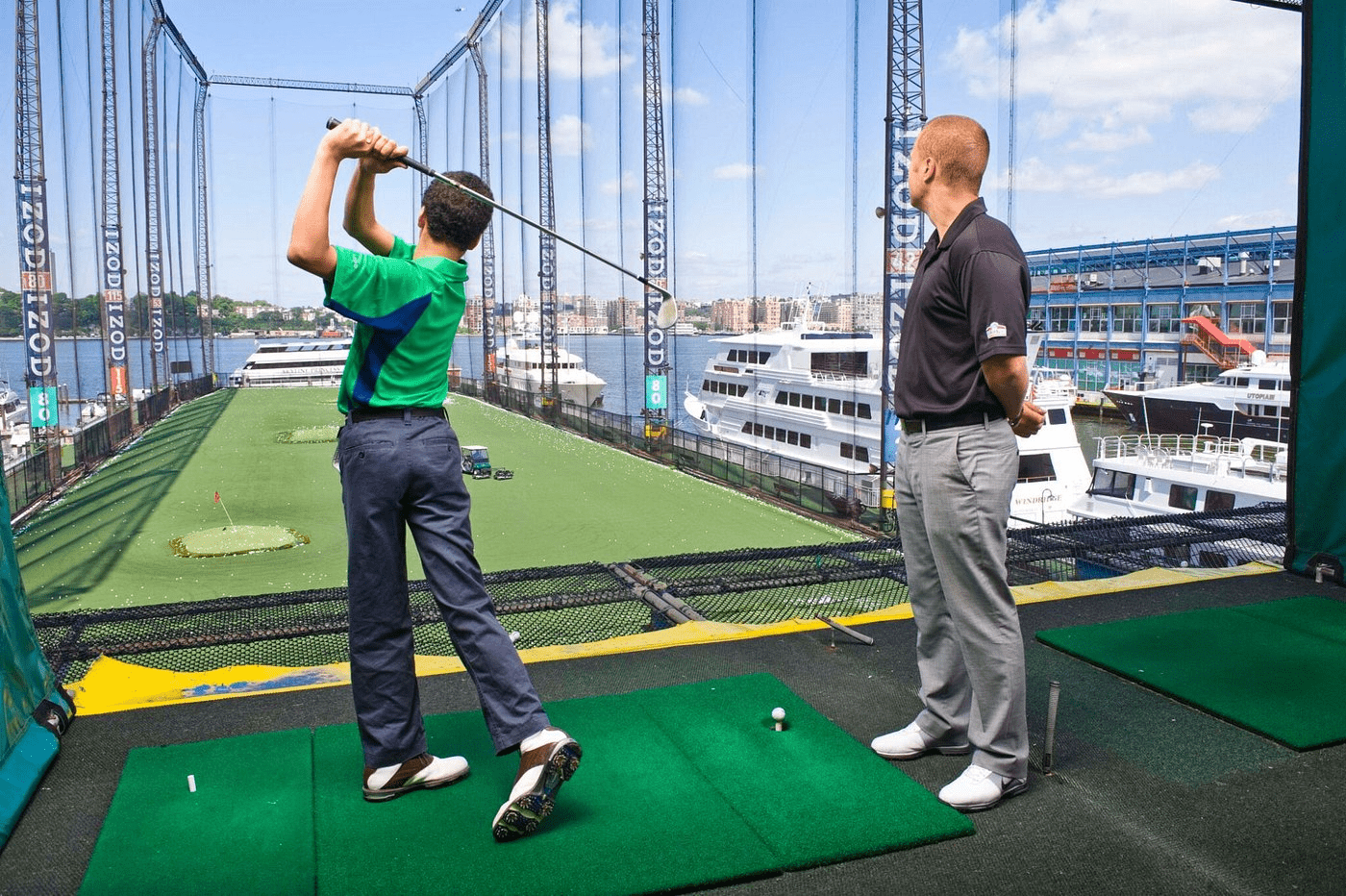

Chelsea Piers Golf Club is a New York City golf destination that shatters expectations about where and how you can play in a metropolis. No trips to the countryside, no rolling greens stretching for acres—just real shots, panoramic Hudson views, and pure city energy. How does this format work, and why do even those who have never held a club talk about it? i-manhattan.com has looked into the details, from the training format to the atmosphere that hooks you from the first swing.
What is Chelsea Piers Golf Club and Where Is It Located?
Chelsea Piers Golf Club isn’t an 18-hole course; it’s a massive urban driving range integrated into the Chelsea Piers sports complex on Manhattan’s west side. Effectively, it is a multi-tiered golf training arena overlooking the Hudson River that operates year-round, regardless of the weather.
The location speaks for itself: piers along the Hudson, just minutes from the bustling streets of Chelsea. There are no traditional fairways or long walks between holes here. Instead, you get dozens of hitting stalls, an automatic ball tee-up system, and a space where beginners, office workers clocking out, and experienced players can all train simultaneously.
This is “city golf” in its purest form. You don’t drive dozens of miles, you don’t plan half your day around it—you just show up, grab a bucket of balls, and work on your shot. This accessibility has made golf in Manhattan less of an exotic rarity and more a part of the urban rhythm.
How Manhattan Golf Differs from a Classic Course
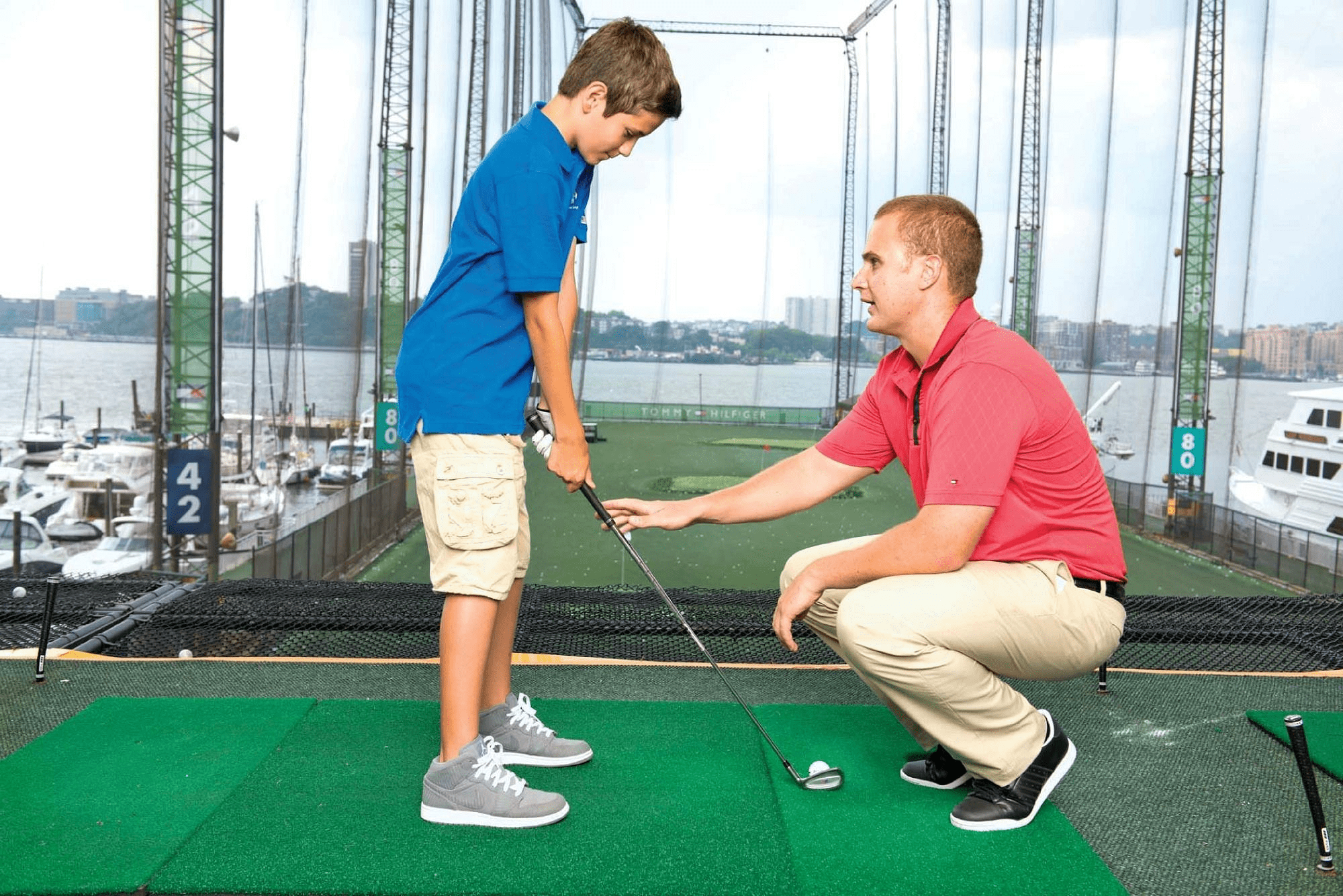
In short, you don’t play a full round here; you refine your swing. Chelsea Piers Golf Club is a vast practice facility, not an 18-hole course. It offers distance, targets, and the ability to hit series of dozens of shots to hone technique to automaticity.
The main difference is this: classic golf is about strategy, tactics, and reading the terrain. The urban format is about technique. You choose a stall, the ball is automatically placed on the tee, and you work on your swing. It is maximally functional: covered and heated areas allow for training even in winter, while the multi-level structure adds a sense of scale.
For those who want more than just “hitting a hundred balls,” golf lessons with instructors and simulators are available. They help break down swing mechanics, club speed, and flight trajectory. It’s almost a golf laboratory—without the pretension, but with concrete results.
Does it replace a real game on a course? No. But as a foundation for technique, it works honestly and without compromise.
Atmosphere and Experience: What It Looks Like in NYC

People come to Chelsea Piers Golf Club for vivid emotions. The strike, the brief pause, the flight of the ball over the Hudson water. Nearby, someone is seriously working on their swing, while someone else is just blowing off steam after a workday. The format allows everyone to coexist without conflict.
Evenings here are special. The lights over the stalls, the hum of the city behind you, and the almost meditative rhythm of impacts. This isn’t a stuffy country club with a strict dress code and rigid traditions. The atmosphere is quite democratic—people come in sportswear, with friends or colleagues.
At the same time, the venue doesn’t feel “mass market.” The equipment is well-maintained, the balls are fed automatically, and the staff operates with precision. There is a sense of balance: on one hand, it’s a sport; on the other, it’s an urban lifestyle. That is why golf in Manhattan is ceasing to be something closed and elite, becoming instead a part of active recreation.
Who is Chelsea Piers Golf Club For?

First and foremost, it is an excellent format for beginners. There is no feeling that you are “out of place.” You don’t need to know course etiquette or understand the difference between an iron and a wood on day one. You can simply show up, get a bucket of balls, and give it a try. And if you want to progress, you can join training sessions with an instructor.
The second audience is those who lack time. In a big city, it is hard to carve out half a day for a full round out of town. Here, it’s simpler: an hour after work, a few dozen shots—and you get the feeling that you exist somewhere outside the office.
It is also a format for the business crowd. An informal meeting with a partner, light sports networking, a joint workout—without unnecessary pomp, but with character. Golf here works as a social tool, not just a status symbol.
And, of course, it is a paradise for tourists. If you want to experience the rhythm of Manhattan, an hour on a driving range with a water view gives more sensations than just another observation deck.
Can the Urban Format Replace a Real Course?
The short answer is no. But the goal of this format is different. A full course involves distance, strategy, dealing with terrain, and the psychology of playing for a score. An urban driving range is about technique, repetition, and control. You aren’t playing holes; you are building the foundation without which playing on a course would be difficult.
At the same time, urban golf is an answer to the realities of the big city. Space is scarce, time is even scarcer, yet the demand for sport and focus hasn’t gone anywhere. A format like Chelsea Piers allows for regular training without turning golf into a logistical quest.
Is this enough for an experienced player? To maintain form—yes. For the full gaming experience—no. But if we look honestly, most urban golfers aren’t looking for tournament ambitions, but the opportunity to hit a ball and disconnect from their phone for at least an hour.
In this sense, the urban format works flawlessly: it doesn’t compete with the classics; it complements them. But generally, you can drop by if you like golf. After all, not everyone is a fan of Madison Square Garden.