

New York’s Broadway street has long become synonymous with everything dazzling and theatrical. It is here, in Manhattan, that the world’s most famous musical theatre exists. In this article on i-manhattan.com, we will explore how it emerged – from dramas, vaudeville, and early experiments. After all, behind the theatrical brand polish lies a long, ambiguous, and sometimes not entirely glamorous history.
What sells millions of tickets today and dictates musical theatre standards on both sides of the Atlantic began with a stage seating a few dozen people, amateur productions, and an audience looking for a bit of entertainment. You will learn about the theatre that accidentally invented the musical, about the immigrants who created a unique language of the stage, and how Broadway survived the digital age and remained vital. You will be convinced that the musical is a serious genre that requires titanic effort on the part of the artists.
The Beginning: What Was in Broadway Theatre Before Musicals
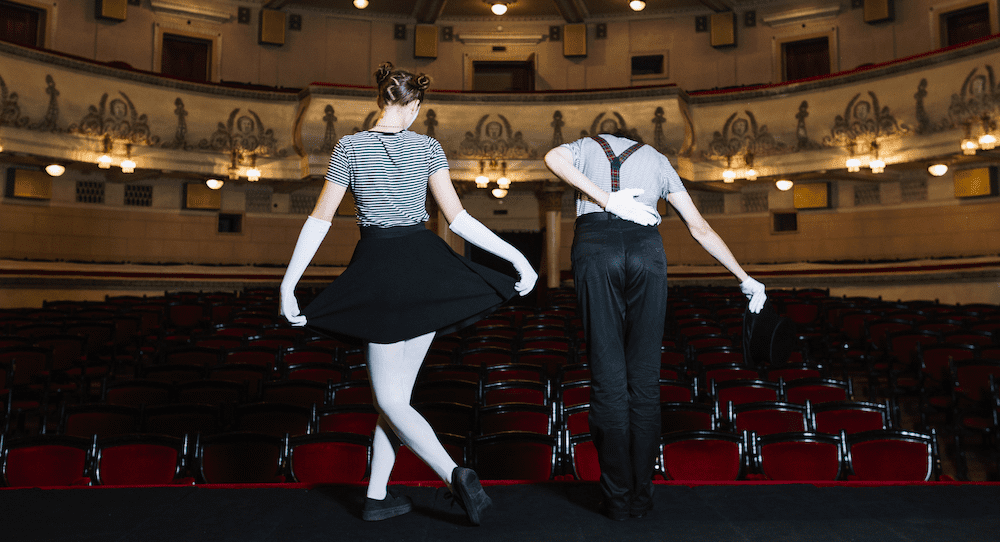
The history of Broadway theatre begins long before the first chords of a musical echoed over Times Square. As early as the 18th century, the first theatrical venues appeared in this area, which then resembled improvised stages. Religious taboos on secular entertainment, which dominated colonial New York, gradually began to disappear. Wealthy people, along with simple merchants, came to dramas, farces, and vaudevilles, which had plenty of satire, dancing, and alcohol during intermission.
However, Broadway was not the theatrical epicentre of New York from the very beginning. Until the mid-19th century, the city’s cultural centre still wandered between streets until it finally settled in the area around Times Square. A very simple reason influenced this: cheaper real estate in the then-underdeveloped Midtown. Theatres gradually began to move towards 42nd Street – and it was there that the theatrical strip we call Broadway today was later formed.
The stage repertoire of that time was diverse: vaudeville, burlesques, operettas – everything mixed into one cocktail. In this blend, the seeds of the future musical were already discernible: music as a vital component, dance, and drama hinting at a plot. But the main thing was still missing – an integrated narrative where songs would be part of the drama. And while this was still maturing, Broadway acquired electric light and red velvet seats.
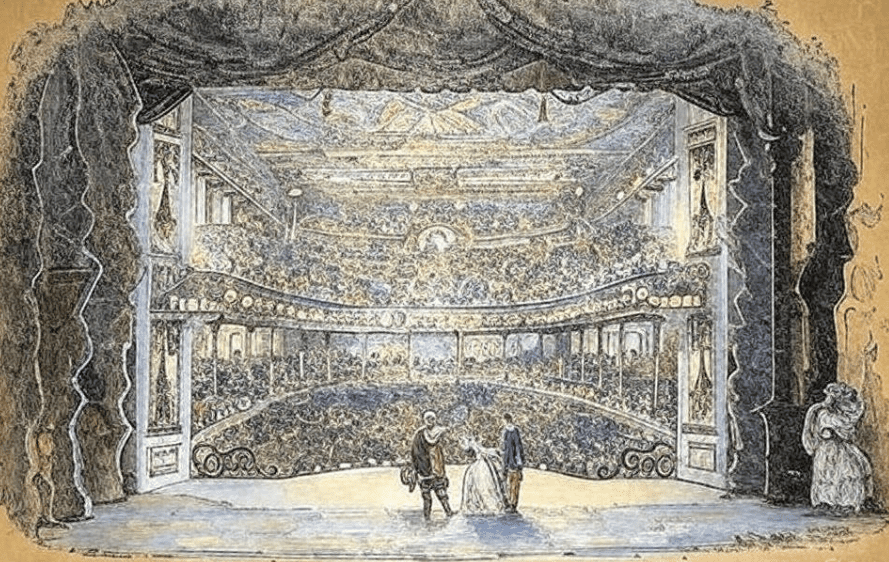
By the way, an important nuance: at the turn of the 19th and 20th centuries, theatre was already beginning to reflect social shifts. Themes of immigration, urbanisation, and new morality appeared in the repertoire. That is, even before the emergence of musicals, Broadway was preparing the ground to become a stage where America could sing about itself.
1866: The Birth of Musical Theatre
When did Broadway change the course of cultural history? It happened on September 12, 1866. That evening, at Niblo’s Garden Theatre, which stood at the corner of Prince Street and Broadway, a production with a concise but historically significant title took the stage – “The Black Crook.” It was a kind of chemical reaction between drama, music, and dance that accidentally created a new form. The production was conceived on the fly, literally “patching” a dramatic play together with a ballet that was on the verge of extinction.
“The Black Crook” lasted over five hours and contained everything imaginable: from phantasmagorias to “lightly dressed” ballerinas. This caused a cultural shock among the audience – and at the same time, furious interest. The show ran for 474 performances, a record at the time. This was a breakthrough, not a compromise, as initially thought. And it revealed a simple truth: stories told through music and dance strike the audience deeper than dry dialogue.
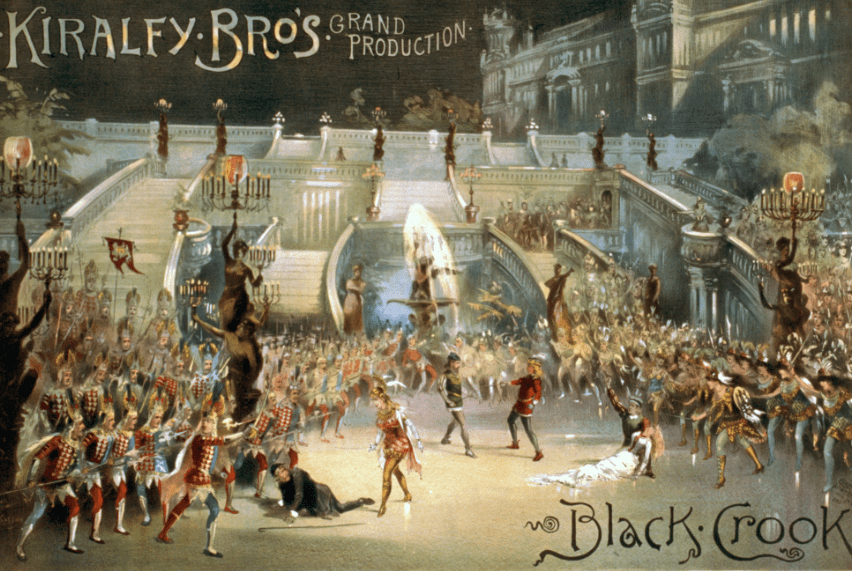
This moment in theatre is often compared to the Lumière brothers’ first film: the audience didn’t quite understand what they were seeing yet, but they couldn’t look away. And although several decades of evolution remained before the musical became a full-fledged genre, it was “The Black Crook” that laid down its main formula – a plot unveiled through music.
Interestingly, during this same period, the number of immigrants was rapidly increasing in the city, and with them, the need for new forms of theatre. People who didn’t fully understand English found it easier to grasp stories through song, rhythm, and emotion.
The Great White Way and the Golden Age of Musicals
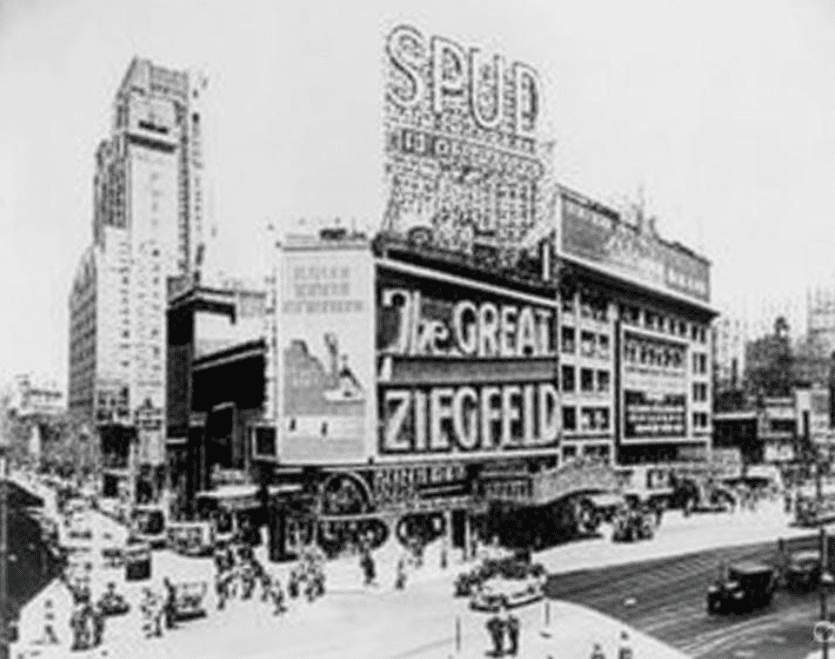
In the 20th century, Broadway confidently stepped onto the cultural forefront of the US – literally and metaphorically. The area around Times Square began to glow with neon so brightly that it earned the nickname “The Great White Way.” But it wasn’t just the signs that made this place bright. It was during this period – roughly from the 1920s to the late 1960s – that Broadway transitioned from theatrical pastime to a true artistic canon.
This was the time when immigrants took the lead, particularly Jewish composers who brought a new musical sensibility. George Gershwin, Irving Berlin, Richard Rodgers, Oscar Hammerstein – all were children or grandchildren of those who migrated to the incredible city’s hip district seeking a better life, and perhaps even high art. It was their work that shaped Broadway’s “golden” repertoire: melodies that played on stage, from gramophones in shops, and in Hollywood films.
But music is only part of the formula. The other, equally important, is the influence of African American culture. 1921 brought the musical Shuffle Along into the Broadway landscape – the first production with an entirely Black cast and jazz musical content. This marked the beginning of the diversity that would later become a hallmark of modern Broadway.
In this era, musicals were not afraid to be political, ironic, sentimental, or dramatic. Imagine: one scene could combine ballet, a symphony, satire, and a cry from the soul – all in 2 hours with an intermission. Theatres were explosive – not because of special effects, but because the audience recognised themselves in the stage characters. Broadway musical theatre became a mirror of a rapidly changing country.
Anyone who tries to reduce the musical today to “songs and dances” hasn’t seen how “Oklahoma!” pioneered a new America. Or how the show South Pacific addressed racism. The stage was much deeper than the variety show then – and that is why this era is still considered golden.
Why Broadway Didn’t Become a Museum: Adaptations and Renaissances
In the 70s and 90s, Broadway had to compete with a new rival – screens. Television, and subsequently streaming, severely hit the industry: some viewers chose to stay home rather than queue for tickets. Theatres had to reinvent themselves – and they did so with the creativity inherent in American show business. Large-scale and revolutionary musicals emerged: “Cats,” “The Phantom of the Opera,” “The Lion King.” There, every costume and stage mechanism was a spectacle in itself.
But most importantly – Broadway began to open up. The success of shows like Rent or Hamilton demonstrated that theatre continued to be unafraid to talk about complex issues: HIV, immigration, and racial politics. And it did so without hypocritical moralizing.
The COVID-19 pandemic severely impacted the industry – stages were dark for almost a year and a half. But even this did not turn Broadway musical theatre into a cultural museum like MoMA. In 2023, sales reached over 1.5 billion dollars. And this proved that the musical genre will live on. After the difficulties, it even became stronger, brighter.
Broadway Musical Theatre as America’s Cultural Index
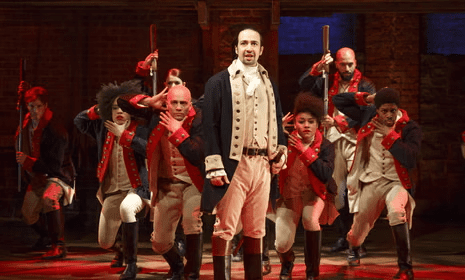
Not all articles about Broadway mention that the musical likes to address topics that cinema often turns away from. Here, the country can be viewed through a magnifying glass: its fears, conflicts, hopes, and stories that sound so candid nowhere else. Productions about the Vietnam War, racial segregation, immigration – all this plays out on the very stage where the can-can was once danced.
Anyone who says that Broadway musical theatre is a light genre understands nothing about culture. In fact, it is a genre with nerve, ideas, and acute social hearing. And if we are to talk about America’s true cultural index – it lives in the titanic work that stands behind the audience’s applause. Clearly, Broadway musical theatre in Manhattan is just as much a classic as the architecture of Frank Lloyd Wright.