

Lawrence Eisenberg (December 21, 1919–December 25, 2018) was an American biomedical engineer and science fiction author. He is best known for his short story “What Happened to Auguste Clarot?” which was published in Harlan Ellison’s anthology “Dangerous Visions”. Eisenberg’s stories have also appeared in other top science fiction publications, including the Galaxy Science Fiction, The Magazine of Fantasy & Science Fiction and Asimov’s Science Fiction. Learn more at i-manhattan.
His short stories have been reprinted in several anthologies, including “Great Science Fiction By the World’s Great Scientists”, “The 10th Annual of the Year’s Best Science Fiction” and “Great Science Fiction of the 20th Century”. He also composed limericks and later became well-known for his poems, which he posted in the comments section of various New York Times articles.
Biography of the future science fiction writer and biomedical engineer
Eisenberg was born in the Bronx in 1919 to the family of Sidney Eisenberg, a furniture salesman, and Yetta Yellen, and grew up during the Great Depression. Eisenberg graduated from James Monroe High School in the Bronx, then attended City College of New York, where he earned a bachelor’s degree in electrical engineering and mathematics. He then continued his education at the Polytechnic Institute of Brooklyn, where he obtained a master’s and doctorate in electronics.
In 1950, following his time in the Air Force as a radar operator during World War II, Eisenberg married Frances Brenner, a social worker and political scientist. She died in 2017. The couple had two children, a daughter and a son. They lived together on Manhattan’s Upper East Side, but when Eisenberg died, he was residing in Somerville, Massachusetts. He died of acute myeloid leukemia on December 25, 2018, at a hospice in Lincoln, Massachusetts. The New York Times published an obituary, the headline of which read: “Larry Eisenberg, 99, Dead; His Limericks Were Very Well Read”.

Photo source: https://readli.net/
Eisenberg worked as a biomedical engineer at Rockefeller University for many years, co-heading the electronics lab with Dr. Robert Schoenfeld and teaching there until 2000. Around 1960, he and Dr. Alexander Mauro cooperated to create the first transistorized radio-frequency coupled cardiac pacemaker. It is on exhibit in Caspary Hall at Rockefeller University.
A feature-length documentary about Larry Eisenberg’s life, “Meet Larry Eisenberg”, is currently in production. Eisenberg’s short stories “The Fastest Draw” and “Too Many Cooks” were used as the foundation for the second season of the BBC2 science fiction series “Out of the Unknown”.
Writing career
In 1962, Eisenberg’s debut short story, “Dr. Beltzov’s Polyunsaturated Kasha Oil Diet,” appeared in Harper’s Magazine. His first science fiction publication occurred later that year, with the short story “The Mynah Matter” in the August 1962 issue of “Fantastic Stories of the Imagination,” where he made his debut alongside Roger Zelazny.
Soon after, Eisenberg began publishing his stories in many of the top science fiction publications of the day, including Galaxy Science Fiction, The Magazine of Fantasy & Science Fiction and If. Eisenberg’s science fiction employs a humorous approach to storytelling. As Eisenberg stated:
“I enjoy wedding humor with science fiction, particularly where some unsavory aspect of our society can be pricked.”
Photo source: https://en.wikipedia.org/
Many of Eisenberg’s short stories include his character, Professor Emmett Duckworth, a research scientist and two-time Nobel laureate. Duckworth’s clever ideas appear to be great at first, but they always end in disaster. One of the numerous inventions of the professor was “an aphrodisiac that is addictive and contains 150,000 calories per ounce, with the property of turning those who take it into walking bombs.” Some of the Duckworth short stories appeared in Eisenberg’s collection of short stories, “The Best Laid Schemes,” published by MacMillan in 1971.
The most popular short story by Lawrence Eisenberg
The short story “What Happened to Auguste Clarot?” by Eisenberg, which appeared in the Harlan Ellison-edited anthology “Dangerous Visions,” is his most well-known work. Additionally, anthologies including “Great Science Fiction of the 20th Century,” “Great Science Fiction By the World’s Great Scientists” and “The 10th Annual of the Year’s Best SF” have reprinted his short stories.
In 1965, he released two collections of limericks, “Limericks for Lantzmen” and “Limericks for the Loo,” coauthored by George Gordon, as well as a collection of short stories titled “Best Laid Schemes.” Later on, he became cult famous for his limericks, which he posted in the comments section of a number of The New York Times articles (there were over 13,000 of them at the time of his passing).
Dr. Eisenberg, who died on Tuesday, December 25, 2018, at the age of 99, was one of the most active writers of reader comments on the website nytimes.com for over a decade, and thus on the internet in general.
Photo source: https://www.livelib.ru/
But, more than his amazing performance (more than 13,000 comments since 2008), he distinguished himself by the format of these comments: poems, usually limericks, properly rhymed, metrically perfect and constantly touching on any news that drew his attention.
The public was informed of his passing by his daughter, Beth Eisenberg. She explained that the cause was complications from acute myeloid leukemia.
Dr. Eisenberg’s poetry has elevated him to a cult following within the dynamic, atomized, strongly opinionated parallel universe of The New York Times online commentators. In 2012, Andrew Rosenthal, then editor of The Times editorial page, remarked that Dr. Eisenberg was “the closest thing this paper has to a poet in residence.”
Limerick, a poetic genre that Eisenberg was enthralled with until his final breath
By day, Dr. Eisenberg was a biomedical electrical engineer and spent a considerable amount of time as a professor at Manhattan’s Rockefeller University. By night, he wrote stories for periodicals like Galaxy Science Fiction and Asimov’s Science Fiction.
Though, at all hours, he was a limner of limericks, a form that first won his heart in midcentury and refused to let go till the end of his life.
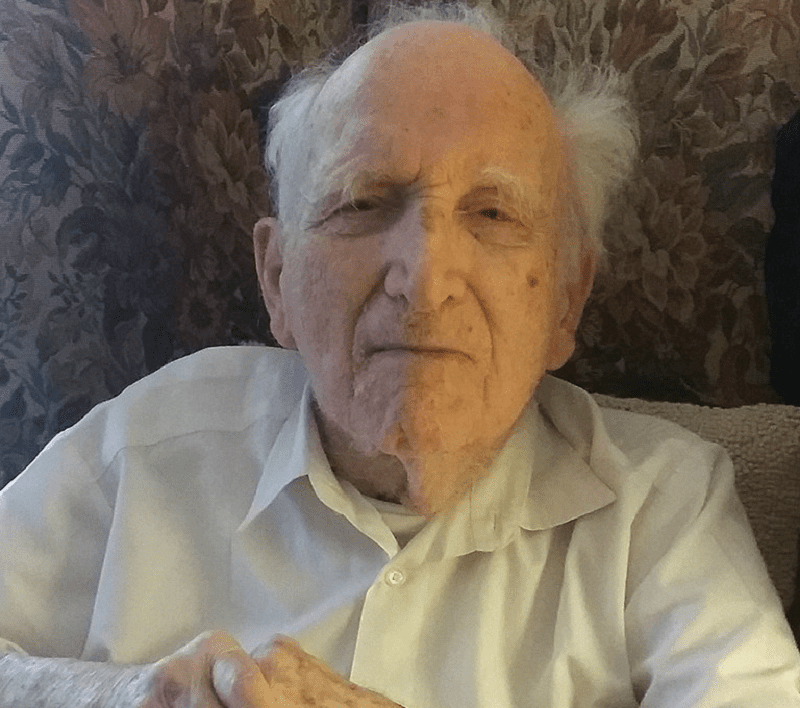
Photo source: https://en.wikipedia.org/
Dr. Eisenberg joined Rockefeller University in 1958 and eventually became the director of the electronics lab. Early in his career at Rockefeller University, he contributed to the development of a battery-powered transistor pacemaker, which is regarded as a substantial improvement over prior wired devices. He lectured at the university until 2000.
Dr. Eisenberg’s best-known work as a science fiction author is the short story “What Happened to Auguste Claro?” The humorous story about a Parisian scientist’s disappearance was published in Harlan Ellison’s well-known anthology “Dangerous Visions” (1967).
He was particularly recognized for his stories about Professor Emmett Duckworth, a passionate but unfortunate Nobel Prize-winning scientist.