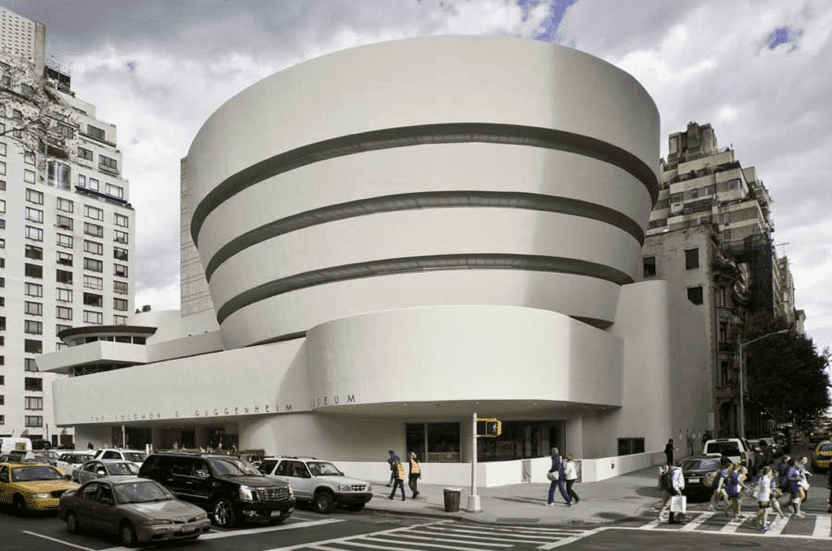

This story is about a museum that attracts visitors not only with a large collection of rare works of great art masters but also with an unusual futuristic building. Find out more about the Solomon R. Guggenheim Museum at i-manhattan.com.
Foundation of the museum
The Solomon R. Guggenheim Museum, or as it is often called the Guggenheim, is the art museum of contemporary art, known for its large collection of rare works by great art masters. The museum is located on 5th Avenue at 89th Street in Manhattan.
The well-known museum appeared thanks to the businessman and avid art collector Solomon R. Guggenheim. In the 1890s, the man began collecting works by famous artists. Eventually, the German-American artist Hilla von Rebay appeared in his life. She changed the collector’s views towards non-objective painting to some extent. Already in 1937, Solomon, together with Rebay, created the Solomon R. Guggenheim Foundation, which was engaged in supporting modern art. The Guggenheim collection increased over time. There was not enough space, so the idea of creating their own museum arose.
To implement this idea, Rebay and Guggenheim turned to the prominent American architect Frank Lloyd Wright with a request to create something unusual. However, as it turned out later, this idea was not very easy to implement. In general, 15 years were spent on the design and construction of the premises. This was due to different factors, including the complexity of the project and a number of delays.
The architect’s sketches were approved in mid-1944. First of all, a quick construction was planned with an estimated value of 1 million dollars. But everything did not go according to the plan. Initially, the construction had to be postponed due to the beginning of the Second World War and, then, due to the increase in the construction cost after the war. In 1949, Guggenheim, not having waited for the construction of the desired museum, died.
In 1951, the foundation moved the collection to an apartment building at 1 East 88th Street for temporary storage.
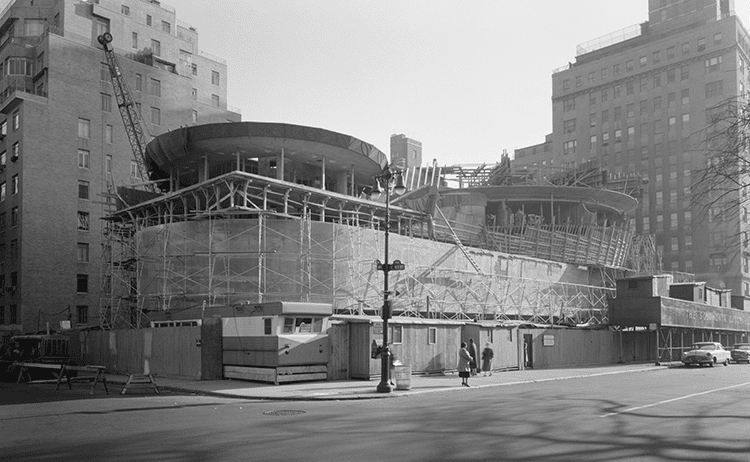
Construction of the museum
In general, the construction process was quite difficult, because there were many contradictions regarding the project of the building, which was proposed by Frank Lloyd Wright. In addition, an obstacle to the implementation of the architect’s plans was the conclusion of the New York City Department of Design and Construction (DDC) regarding the non-compliance of the project with the construction standards of the United States.
In 1956, before construction began, the Solomon R. Guggenheim Museum moved for temporary residence to the Oliver Gould Jennings House located at 7 East 72nd Street. The collection was kept here throughout the whole construction period. The building process itself began on August 14, 1956. The construction was completed in 1959. However, the architect Frank Lloyd Wright himself did not live long enough to see this event, having died half a year before the opening of the museum.
Some facts about the building
After the completion of the construction, the appearance of the museum caused quite a stir both among the local population and art critics due to its very unusual appearance. Many artists were simply afraid to exhibit their works because of the rather strange architecture of the building. However, everything changed dramatically over time, of course, in a better way.
As for its appearance, the building resembled a spiral that expanded from the bottom to the top. In general, the building consisted of two spiral structures, a six-story main gallery in the south and a smaller “monitor” in the north. The outside of the building was decorated with concrete mortar and had the color of the so-called “ivory”. Interestingly, Wright wanted to make the building out of marble, but concrete stucco was used later precisely because of cost savings.
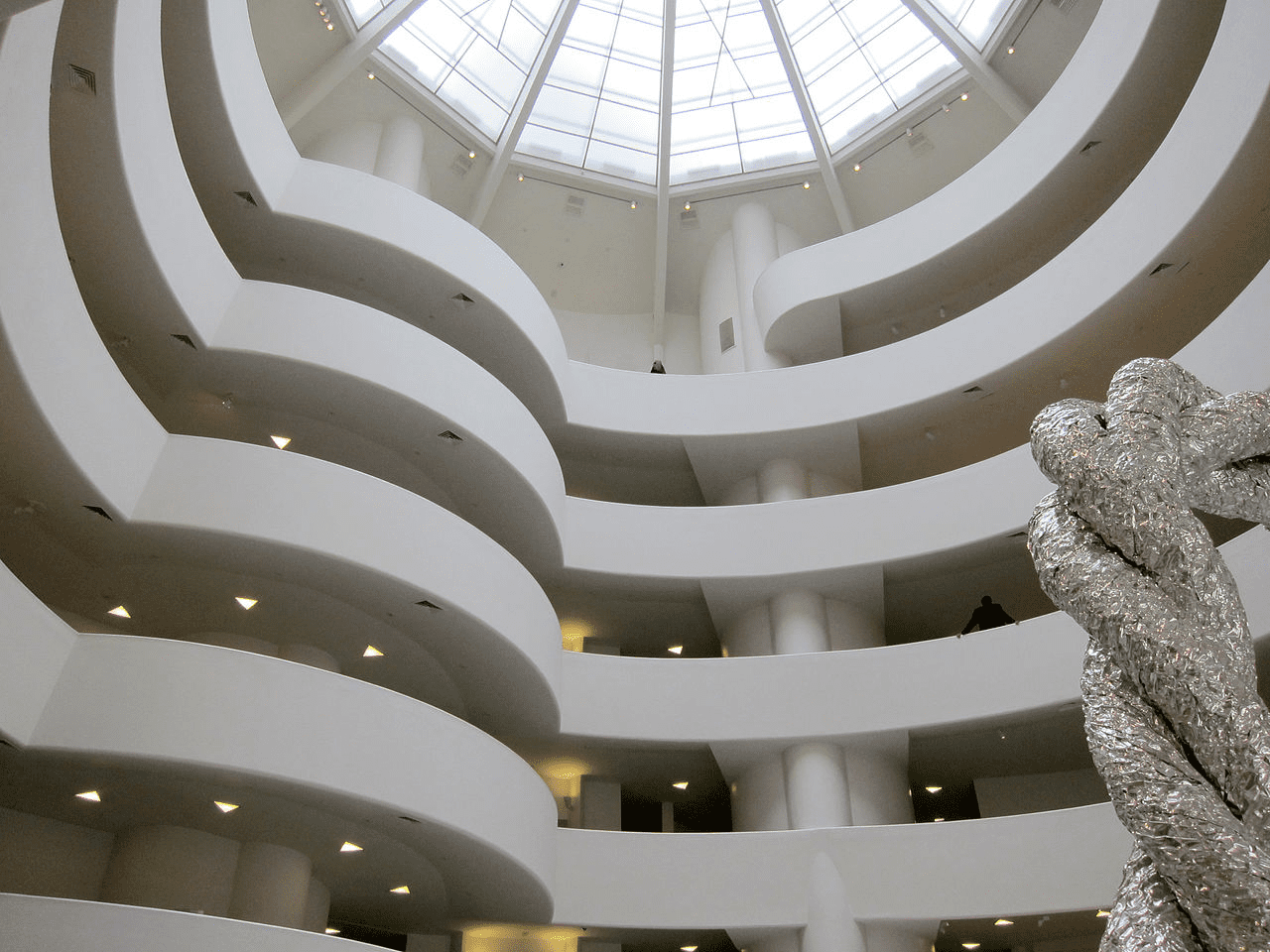
Inside, the building also has a light framing. The museum includes monitor sections, the main gallery, a lecture hall, a bookstore, a lobby, a cafe, etc. However, the main gallery, which, accordingly, has the shape of a spiral, attracts the attention of visitors most of all. The central light window, which is located on the ceiling, provides an exceptional atmosphere. Guests can move between floors by stairs or the elevator.

Museum collection
The Guggenheim collection includes about 8,000 works by famous masters of the XIX-XXI centuries. Visitors can admire the sculptures and paintings of the early avant-garde as well as painting in the style of post-impressionism, modernism, impressionism, German expressionism, abstractionism and surrealism. In the museum, you can see the pictures of such outstanding masters of painting as Picasso, Van Gogh, Mondrian, Léger, Klee, etc.