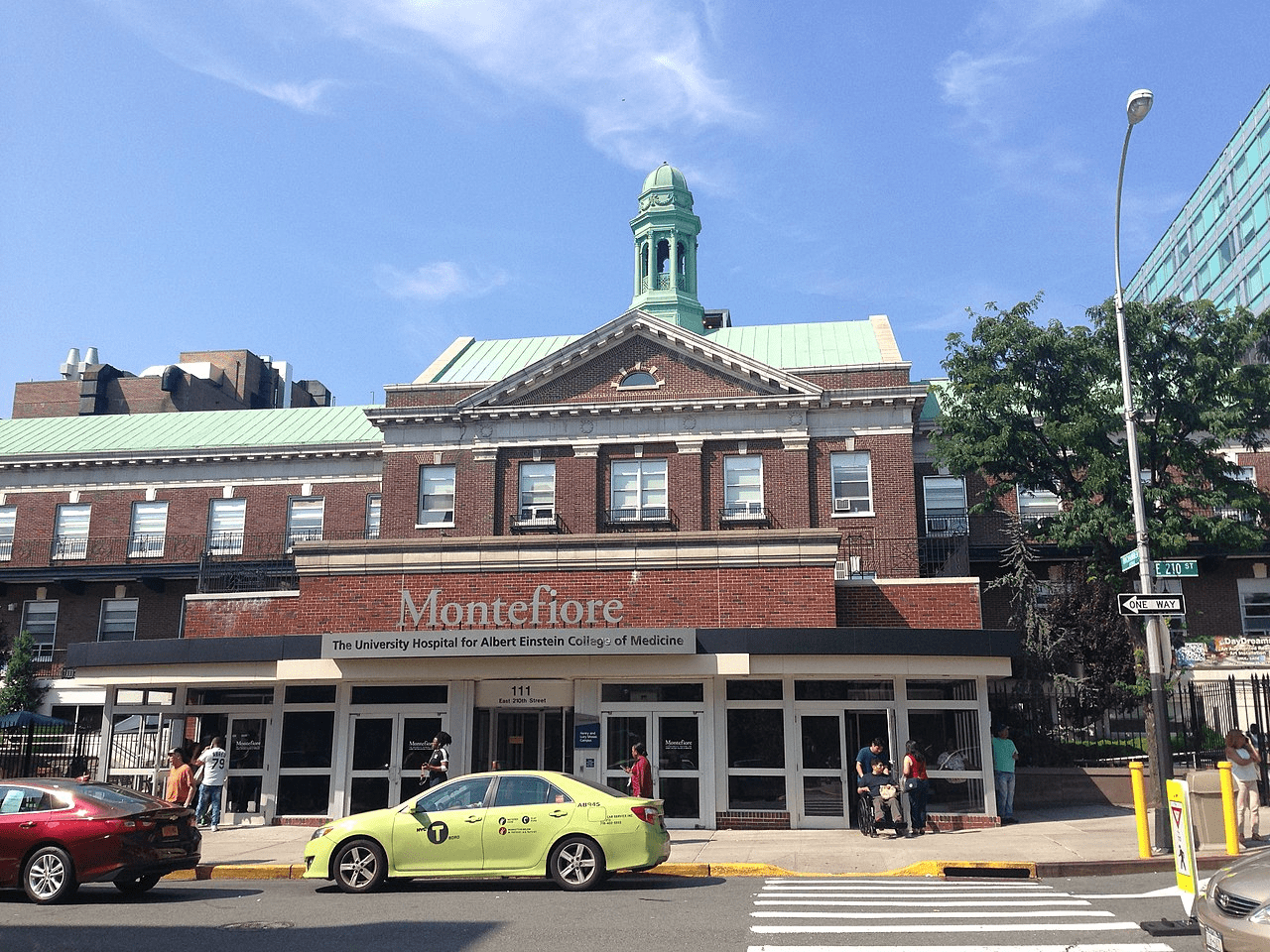

This article tells about a charitable hospital sanatorium that operated on a philanthropic basis. It was engaged in treatment and rehabilitation of patients who were rejected by local hospitals. Read about the establishment and activities of Montefiore Home for Chronic Invalids at i-manhattan.
Establishment
Montefiore Home for Chronic Invalids was a charitable hospital that provided medical assistance, shelter and food to sick individuals, mostly those with incurable conditions. The institution was funded by the Jewish community.
The idea of creating such an institution emerged in 1884 at the gathering in honor of Moses Montefiore. Therefore, on April 21 of the same year, the sanatorium-type hospital officially opened on East 84th Street. It was called the Montefiore Home, a Hospital for Chronic Invalids. Its director became Dr. Senff.
Development and further activities
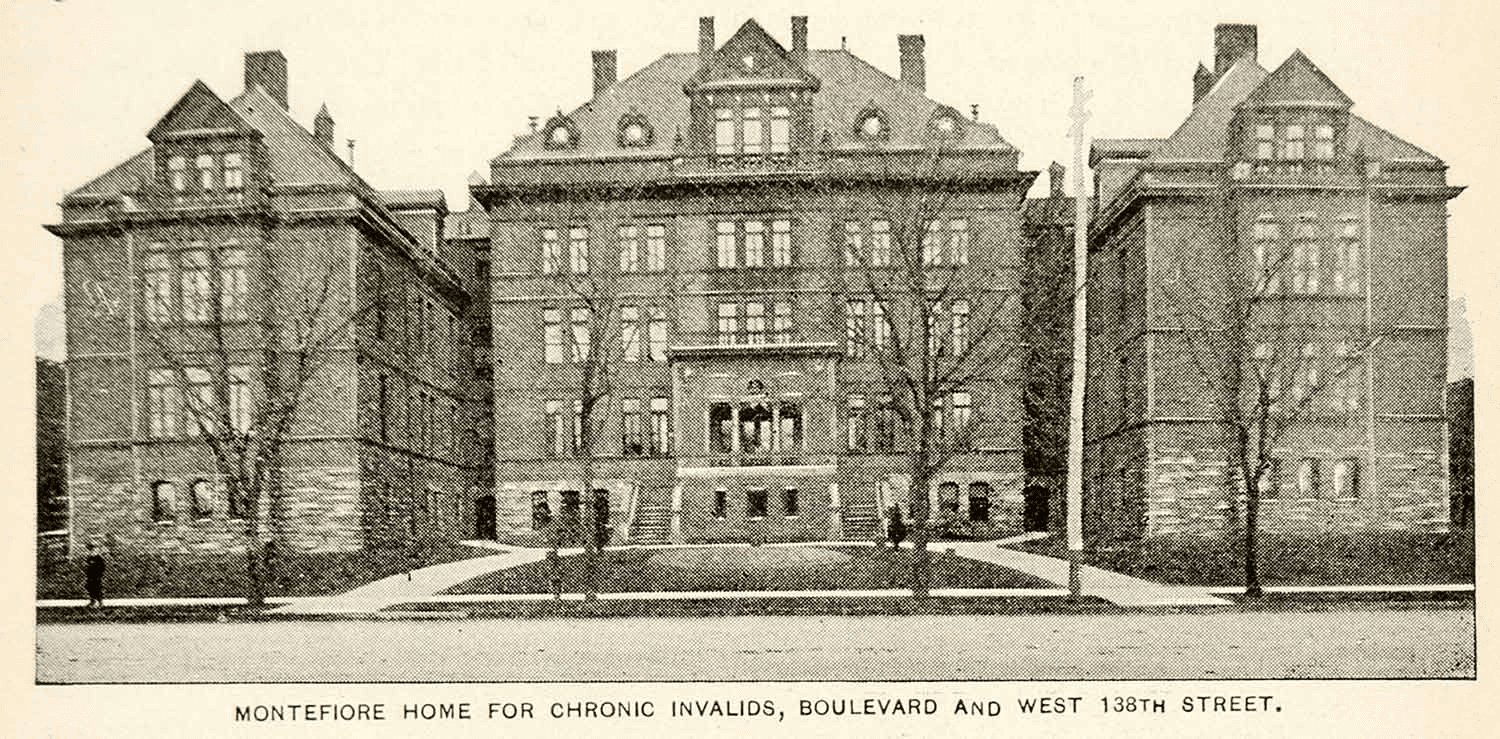
The premises on East 84th Street became too small for the institution, so in 1887, it moved to a more spacious building located on Broadway at West 138th Street. The new structure was designed in Italian style, with a facade framed in red brick and granite. There was an open courtyard nearby. Overall, the central building had five floors, which housed a laundry, kitchen, dining room for three hundred people, a large synagogue, as well as patient bedrooms of various sizes and lighting. Bedrooms with eight to sixteen beds were considered large. There were an average of eight windows. The rooms, illuminated by gas and electricity, and heated by steam, looked bright.
This time, the institution fully focused on tuberculosis patients. The sanatorium had about forty places for women and around thirty for men, with priority given to the poor. All patients could stay there for as long as they needed.
Patient rooms were frequently disinfected. Linens were cleaned with hot air, and rooms were either repainted or fumigated. Generally, carbolic acid was commonly used for disinfection in this institution.
There were usually three nurses in the women’s rooms and two in the men’s rooms. Besides the nurses, there were about twenty-three doctors. In 1901, the institution changed its name to Montefiore Hospital for Chronic Diseases.
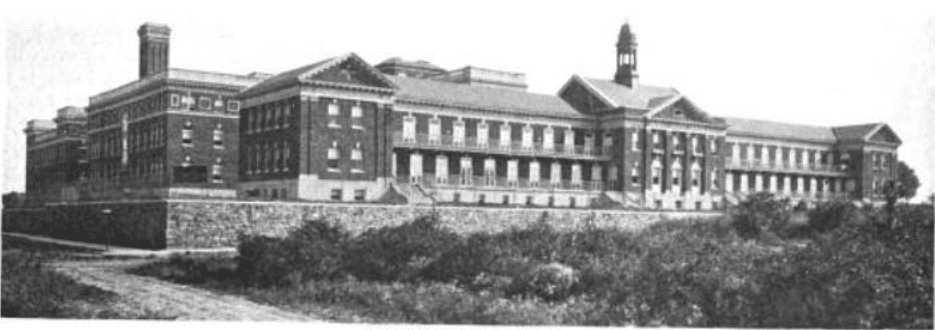
In 1910, the facility purchased a plot of land in the Bronx on 210th Street for $750,000. A large building was planned to accommodate more than seven hundred patients. The cornerstone of the new building was laid on October 27, 1912.
Now, let’s talk about the building itself. It was designed in the Georgian style and consists of several blocks, including an administrative block, dining room, service wings, synagogue, a tuberculosis hospital, surgical and medical departments, staff housing, etc.
It is a simple brick construction adorned with decorative elements such as cornices, belts, window lintels, etc. The administrative block has a lighter and more elegant appearance due to its proportions and the use of exquisitely crafted terracotta as decorative details.
Overall, it is worth noting that during this period, not only did the exterior appearance of the institution change dramatically, but also its name. It was called Montefiore Home, a Hospital for Chronic Invalids and Country Sanitarium for Consumptives, Montefiore Home and Hospital for Chronic Diseases, Montefiore Hospital for Chronic Diseases and later Montefiore Home for Chronic Invalids.
Today, this institution is named Montefiore Medical Center and is a leading academic medical center and training hospital of the Albert Einstein College of Medicine in the Bronx.