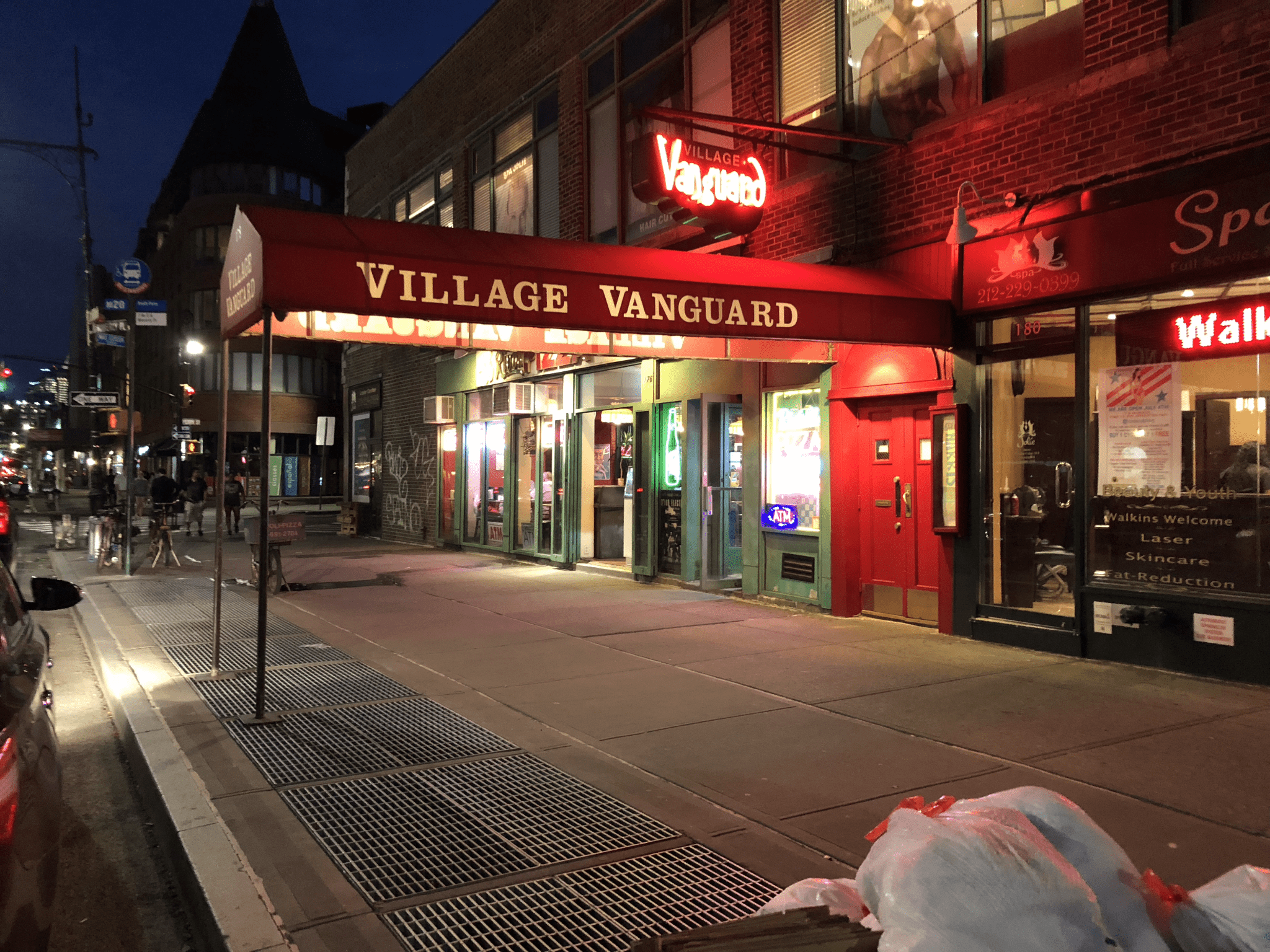

The Village Vanguard is a club that looks like an unassuming basement in Manhattan’s Greenwich Village, but is in fact deeply woven into the cultural geography of New York City. They don’t put up flashy signs here, they don’t serve oat milk lattes, and they don’t organize retrospectives on “how much we love jazz.” They play. Sometimes with errors, sometimes with breakthroughs, but always live. On i-manhattan.com, we will gather the pieces of its history, analyze its landmark recordings, and look at how it survives in an era where jazz often serves as mere background music. And we will try to understand why the Vanguard still holds its status as a place where the love for jazz brightly burns in dedicated hearts.
The Vanguard’s History: From Poetry Nights to a Jazz Mecca
The Vanguard has operated continuously since 1935. It predates the era when poets and folk singers dominated the center stage, and it has since managed to transform into the birthplace of some of the most influential jazz recordings of the 20th century. But it’s too early to preserve the club under glass as a museum exhibit – in the 21st century, it still gathers orchestras every Monday, hosts streams, and introduces new names to listeners.
In 1935, Max Gordon rented the basement space on Seventh Avenue and opened a venue for anything that had even a hint of art. Folk singers, stand-up comedians, and Beat poets performed on stage. Music occasionally appeared – but not as a core genre, rather as part of the broader bohemian scene.
Jazz began to gradually break into the program – and by the mid-1950s, it had completely taken over. In 1957, the Vanguard officially became a jazz club. It is from that moment that its history begins to unfold in the rhythm of the saxophone, the double bass, and the nervous piano.
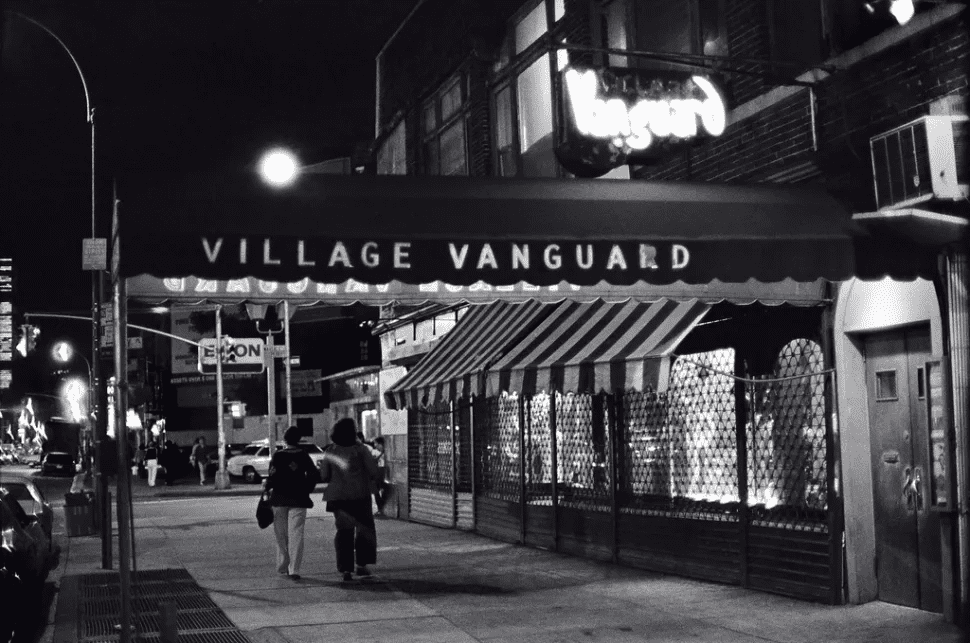
Interestingly, the club’s exterior has barely changed. The sign is old, the facade modest, and the surroundings are still the same Greenwich Village, which has become respectable over the years but still carries the scent of student dreams. Inside – wooden tables, cramped rows, a spotlighted stage in the triangular room. But those who enter for the first time quickly realize: this is a place with a long memory. And with very specific acoustics – the sound here doesn’t dissipate; on the contrary, it concentrates. This isn’t a bonus; it’s the main feature.
Another interesting nuance: the club has always been a family business. After Max’s death, his wife Lorraine Gordon continued his work – a cultural manager who, essentially, made the Vanguard what we know today. Currently, their daughter manages the establishment – and this lineage works better than any brand management.
The Vanguard’s chronology is a history of constant change, with only one constant remaining: every evening, someone steps onto the stage and plays. Not always flawlessly, not always in the mood, but straight from the soul.
The Stage That Echoes History: Legendary Recordings and Performers
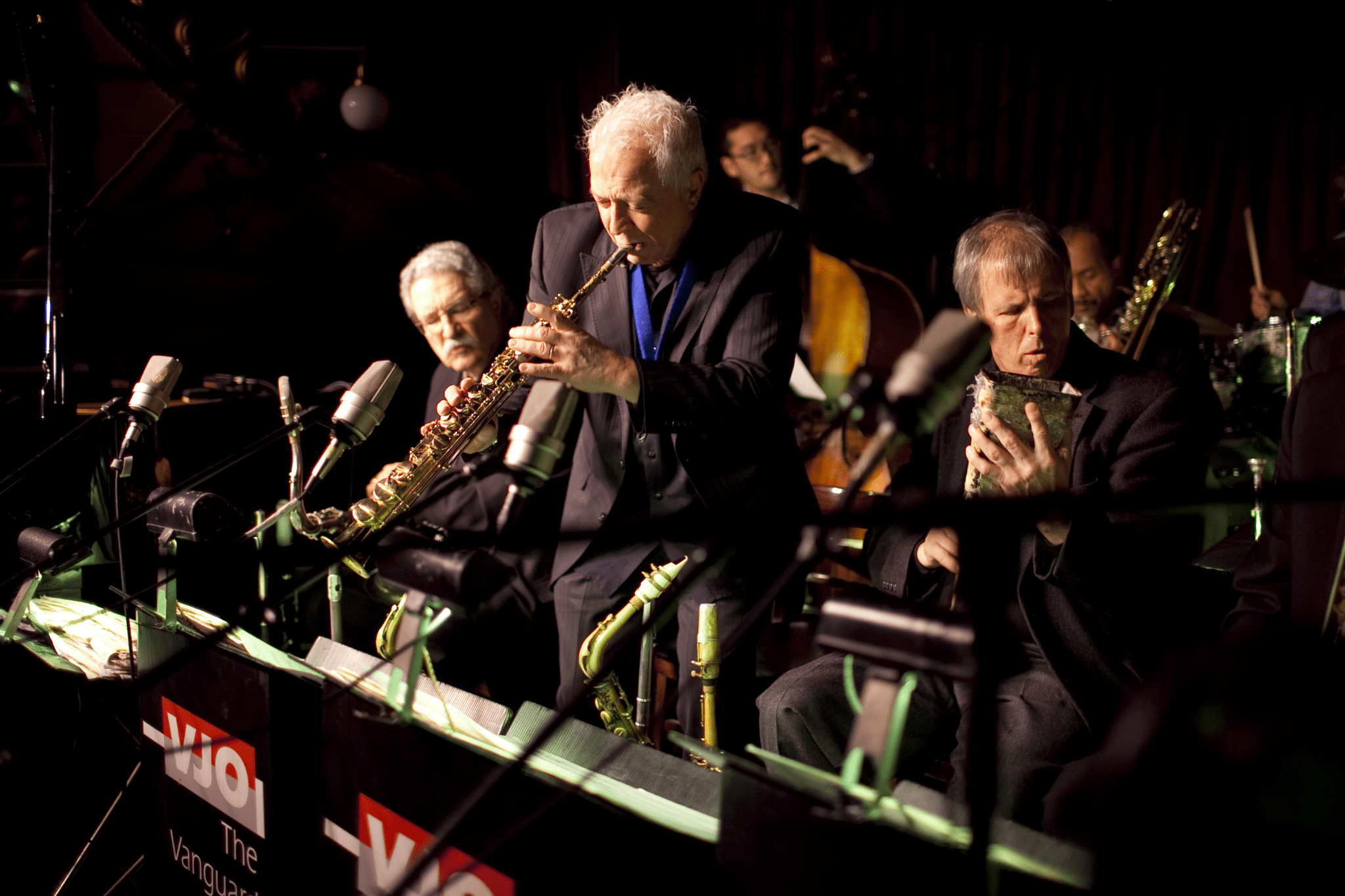
The Vanguard’s history can be put on a record player. It is here that some of the most influential live jazz albums were recorded. And quite literally – the sound came from the very stage where the grand piano now sits, and the bass is pressed against the back wall.
In 1961, Bill Evans recorded three sets here with bassist Scott LaFaro and drummer Paul Motian. The albums Sunday at the Village Vanguard and Waltz for Debby are still considered benchmarks – for their emotional density, intimate atmosphere, and the perfect balance between the instruments. When you listen to these recordings, you hear the room.
A little earlier, in 1957, John Coltrane stopped by to record Live at the Village Vanguard. Later came Sonny Rollins, Thelonious Monk, Chet Baker, and Art Pepper. For many artists, a concert at the Vanguard was a kind of initiation: you’re not at the peak yet, but you’re in the game. And if a recording works out here – it means you’ve passed the test.
What is the reason for such popularity? Perhaps technical flawlessness? Far from it. The Vanguard did not edit mistakes – everything was recorded in real time. There was a special trust in this: as if the club and the audience were telling the musicians – “we listen to you as you are.” And this rawness is part of the aesthetic.
Today, the term Live at the Village Vanguard has become a marker of quality. Musicians still travel here from all corners of the world precisely to record a live set in this atmosphere – without polish, without retakes, in the dynamic of a real evening.
Role in Jazz Culture: Not a Museum, But a Venue with Character
The Village Vanguard is often called the “Mecca of Jazz” – although pilgrimage with hands raised to the sky is not the custom here. People come here to play, to listen, sometimes to argue about solos, but always – to be in the process. The Vanguard doesn’t preserve jazz; it keeps it in circulation.
This is a venue where, since 1966, a large ensemble – the current Vanguard Jazz Orchestra, which grew out of the Thad Jones/Mel Lewis band – plays every Monday. Incidentally, they still take the stage, changing only individual musicians, but not the rhythm or the level.
The club never focused solely on stars. On the contrary – it provides a platform for young, often unknown musicians. It is here that the audience might hear someone who will be headlining festivals tomorrow, but today is simply holding their first solo set in the legendary hall.
This place emphasizes the daily presence of jazz in culture. It is here as if it were at work – playing, growing, taking risks. And it is thanks to clubs like this that jazz has not dissolved into the covers of old records. It still has character – sometimes nervous, sometimes funny, but always alive.
The Basement Atmosphere: What You Feel When You Are There
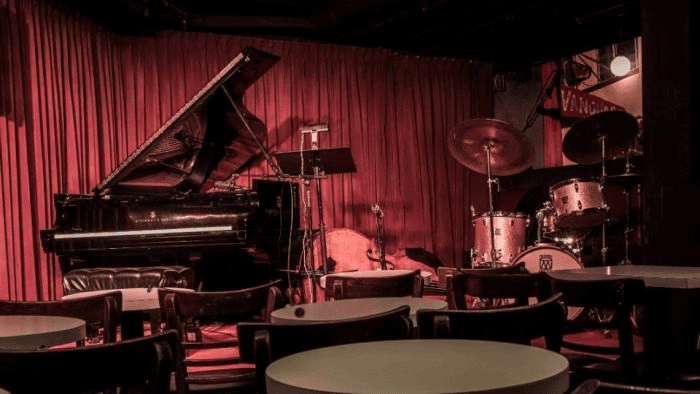
Entering the Village Vanguard is like suddenly finding yourself in a place where time stretches. A small basement, a few rows of tables, dim lighting, a bar in the back, a stage up front. Everything is simple. But this very simplicity creates tension – the anticipation that something real is about to happen.
The triangular shape of the room is seemingly sliced for sound. This is not a designer’s concept, but an architectural accident that became an acoustic hit. There is no perfect frequency balance here, but there is concentration: the sound literally clings to the walls. The double bass feels closer than the neighbor at your table, and the drummer’s cymbal sometimes sounds as if someone brushed it behind your back.
The stage is low – audience members sit almost at the musicians’ level. You are not observing; you are coexisting with the music. This effect of intimacy creates the impression that the concert is happening just for you. Especially when there is the clinking of ice in a glass at a nearby table, and on stage, the bassist is figuring out where to take the improvisation.
The audience is a mix of music lovers, musicians, tourists, and casual acquaintances. But as soon as the music starts – it becomes quiet. They don’t shout “play more” from the table, and they don’t record everything non-stop on their phones. They listen. And that is the main difference between the Vanguard and trendy “jazz nights” in cocktail bars.
Current Status: Relevance and Streams That Break Stereotypes
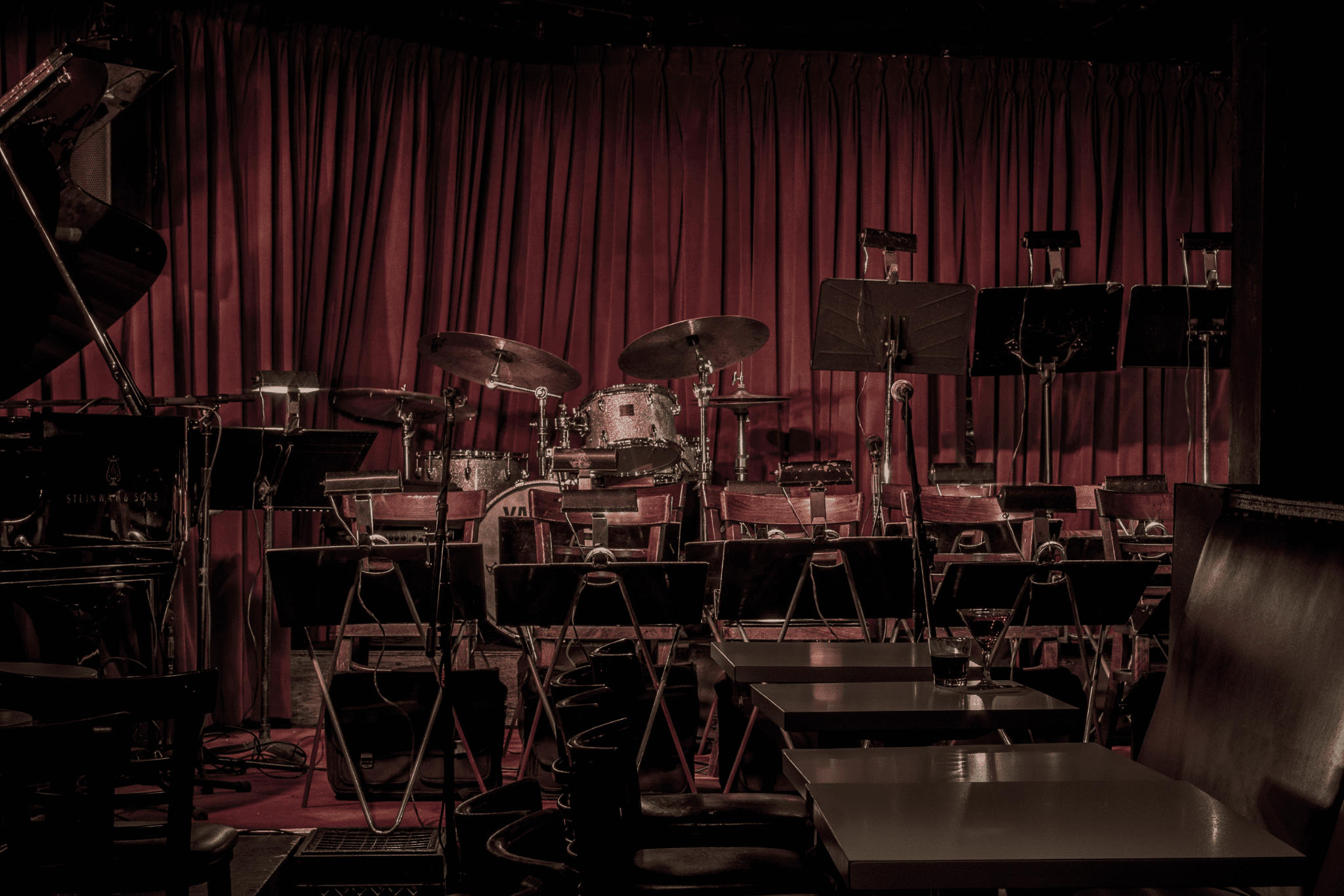
In 2020, when everything closed and the stage was suddenly replaced by Zoom, the Village Vanguard did not wait for “better times.” The club was one of the first in New York to launch professional live streams from the empty hall – with high-quality sound, multiple cameras, and minimal editing. Not because it was trendy, but because the music had to continue playing. And it did play – on screens in Berlin, Tokyo, and Lviv.
One might think jazz is an intimate affair, and not everyone survives the translation to online. But the Vanguard proved again: the stage here works according to the laws of real-time. The musicians played in the same room, by the same rules, just in front of an invisible audience. And it turned out honest and engaging.
Today, the club continues to invite new artists: improvisers from Chicago, electro-acoustic ensembles, classical trios, and experimental solos play here. The Vanguard does not adjust to the demands of streaming platforms; rather, it creates its own standard. If an artist gets here – it means they have something to say.
The forecast is that the Vanguard will continue to be the place where jazz is tested. And if someone says the genre has long been dead, one should just go in here any evening, sit in the second row, listen to the drummer rhythmically arguing with the pianist… And remember that jazz is often bold and unexpected, like the Manhattan projects of architect Frank Lloyd Wright.