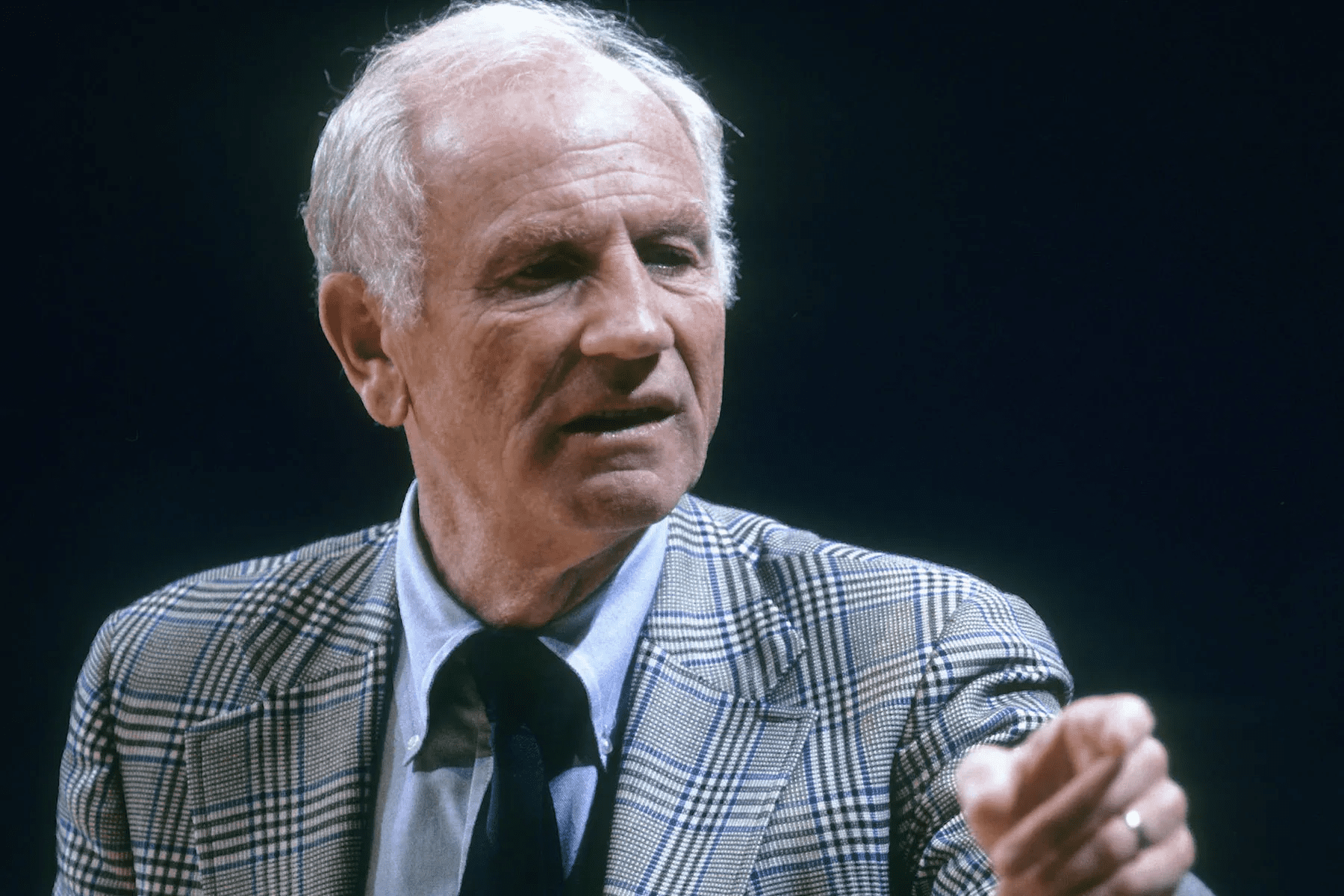

William “Red” Holzman is the legendary New York Knicks coach whose name is forever linked to Manhattan and the golden era of New York basketball. Under his leadership, the team secured two NBA championships while playing at Madison Square Garden, right in the heart of New York City. Explore his history and achievements at i-manhattan.com.
But Holzman’s legacy goes beyond trophies. It is deeply rooted in a unique style of play that perfectly mirrored the city’s character: understated, ironic, and demanding of high-quality execution. At a time when basketball was increasingly leaning toward individual highlights, the Knicks offered something else—a game where strategic thinking and teamwork were valued just as much as athleticism. Manhattan provided the perfect stage for this philosophy to unfold.
Manhattan and Madison Square Garden: Where Brains Beat Brawn
Red Holzman saw New York as a living participant in the game. In the 20th century, Manhattan moved at a relentless pace; it had no patience for phonies and zero tolerance for empty hype. People here loved sports, but they loved logic, wit, and results even more. When Holzman took the reins of the New York Knicks, he quickly realized that to earn respect in this town, you had to outthink the opposition.

The team’s home court was Madison Square Garden—an arena in the center of Manhattan where journalists, writers, and actors sat alongside die-hard fans. This was a crowd with sharp eyes and even sharper questions. In such an environment, primitive “hero ball” didn’t last long. The fans wanted a game with substance, and Holzman intuitively understood that demand.
His players didn’t try to outshout the city; they played in harmony with it. Ball movement, constant passing, and precise positioning made their dominance look almost routine, and that was exactly what won the fans over. Manhattan doesn’t applaud lucky streaks. It values consistency and composure. Holzman’s team delivered exactly that.
Interestingly, while the NBA was drifting toward individual showmanship, solo drives, and stat-padding, the Knicks looked almost counter-cultural. It is a paradox that in New York—a city synonymous with noise—such a restrained, “quiet” model of play became the gold standard.
Looking back, it’s clear that Holzman’s success wasn’t a fluke. It was a precise response to the local culture. There is a common misconception that Manhattan only cares about superstars. In reality, this city has always prized those who know how to think—both on and off the court. This was the foundation for a team that made unselfish play fashionable.
The Holzman Philosophy: Order Over Individual Heroics
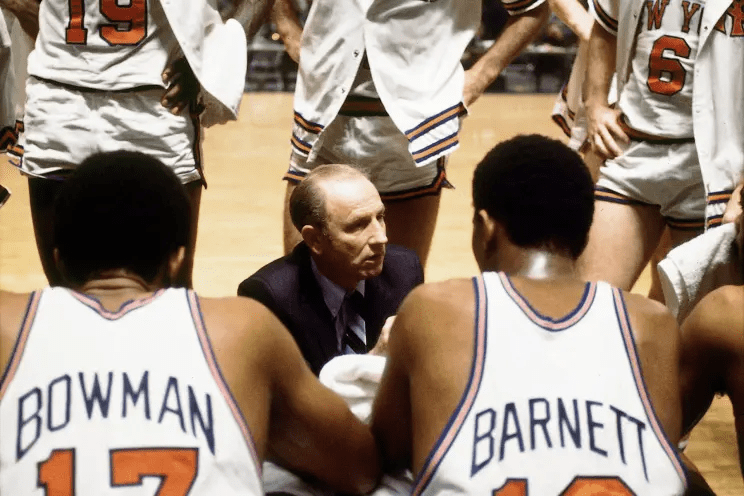
Red Holzman never played the role of a prophet. He didn’t use flowery language to explain basketball or package his ideas into flashy slogans. His approach was pragmatic: the ball must move faster than the defense, and the decision must be made before the contact occurs. While other teams built around a single star, Holzman created a system where every player understood their role and no one tried to hog the spotlight.
Sports journalists noted even then that for Holzman, basketball IQ was just as vital as physical stats. In practical terms, it meant thinking faster than you could jump. For New York’s impatient public, this intellectual approach might have seemed risky, but it was precisely what earned their loyalty.
Individuality wasn’t banned in this system, but it was strictly disciplined by team logic. A player could take the initiative only if it was a natural progression of the play, not an attempt to fish for applause. Ball movement, spacing, and timely passes were held in higher regard than a spectacular but empty solo effort.
This wasn’t a romantic approach; it was gritty and pragmatic. Holzman read the game like a book, watched defensive reactions, and made cold-blooded adjustments. This allowed his team to dismantle opponents quietly—without much fuss, but with total efficiency. It also debunks the myth of a “purer” past; the game back then still had its share of “dirty tricks” and physical toughness. Holzman simply realized before anyone else that the future belonged to five players thinking as one.
“Thinking Man’s Basketball”: How the Knicks Controlled the Court
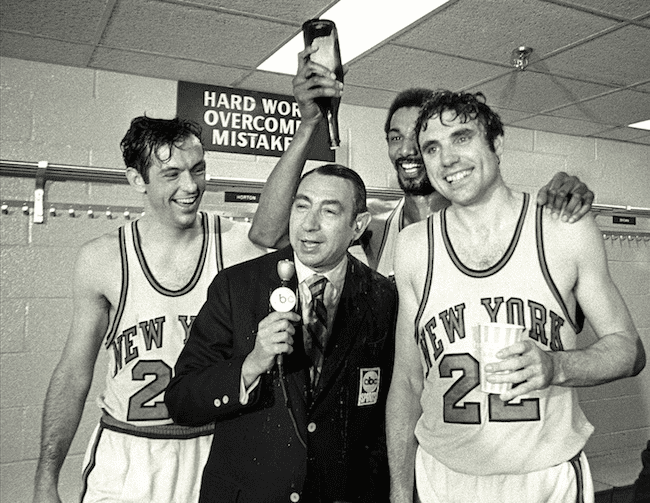
Red Holzman’s team never tried to overwhelm you in the first second. Instead, they tested your patience. A slower buildup, several passes without an obvious opening, a calculated pause—and then a sudden move that broke the defense wide open. To a casual observer, it might have looked cautious. To those who understood the game, it was a chess match played at the speed of the big city.
One of the core principles was that the attack began before a player even touched the ball. Constant off-ball movement, timely screens, and reading the defense created advantages that don’t show up in highlight reels. This is why Holzman’s Knicks often won through rhythm control rather than scoring streaks. They dictated the tempo, forcing opponents out of their comfort zones.
Reporters at the time dubbed it “Thinking Man’s Basketball.” It was a compliment, but also a warning: this style isn’t always flashy if you’re looking for a circus. However, it is incredibly hard to break. The Knicks rarely panicked and never rushed; in crunch time, they looked like they had everything under control.
There is a lingering myth that this team was too slow for the modern game. In reality, they were only slow when it was a tactical advantage. When the opportunity arose, the Knicks accelerated instantly. They didn’t run just to impress; they used speed as a tool, not an end goal. Their game featured a deliberate arrhythmia, much like the tactical shifts practiced by the famous Ukrainian soccer coach Valeriy Lobanovskyi.
Why You Can’t Understand the Knicks Without Red Holzman
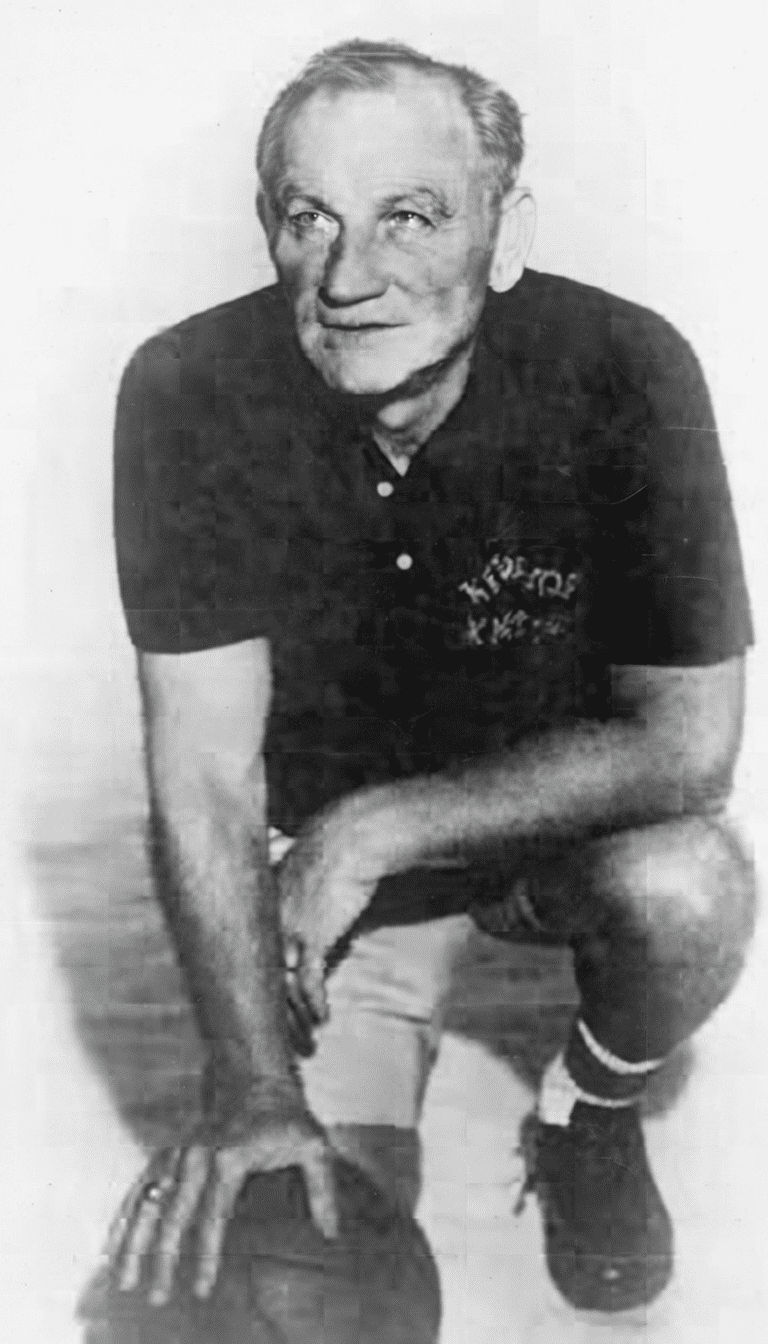
People often try to explain the history of the New York Knicks through star names and dramatic trades. But without Red Holzman, that formula falls apart. He established the framework that allowed the club to become a cohesive unit for the first time. While two championship titles look great on paper, the real victory was the triumph of a system over a random collection of talent.
Some claim the Knicks’ success was just a lucky coincidence of having the right players at the right time. The facts suggest otherwise. Holzman didn’t just adapt to his players; he built an environment where everyone had to think in unison. Stars didn’t disappear, but they stopped competing with each other for attention. In a city like New York, where distractions are everywhere, that kind of discipline was rare and effective.
Another popular myth is that Holzman’s style died out with 20th-century basketball. In truth, many modern trends are just rediscoveries of his ideas. Ball movement, reading the defense, and eliminating unnecessary dribbling are once again the hallmarks of elite teams. Only the pace has changed; the principles remain the same.
Looking ahead, as basketball continues to balance between entertainment and structure, Holzman’s ideas will always cycle back into fashion. Whenever a team hits a dead end with individualism, they inevitably look for order. That is when his approach—the one that once fit the character of Manhattan so perfectly—proves its worth again. Red Holzman remains essential not just for the titles he won, but because he gave New York a way to think on the court. To basketball, he is a Figure with a capital F, just as the Flatiron Building is to Manhattan.