

Lou Carnesecca is a legendary American basketball coach, born in Manhattan in 1925, who made St. John’s University the symbol of New York college basketball in the 20th century. His Manhattan roots shaped his character and work style—tough on details, emotional during the game, and incredibly human in his relationships with players. It was this specific combination that allowed him to cultivate teams that kept New York at the center of the nation’s basketball life for decades. Read on at i-manhattan.com as we discuss the most interesting facts about Carnesecca: his life, career, personality, and approach to the job.
Biography: A Manhattan Boy’s Journey to the Hall of Fame
Lou Carnesecca’s life is a consistent story of growth, free from sharp plot twists but filled with a clear logic of development. From playground matches in New York to the Naismith Memorial Basketball Hall of Fame, his path spanned decades. Breaking it down by stages, one thing becomes clear: his character was formed before the big wins arrived.
Childhood and Character Building
Luigi Carnesecca was born on January 5, 1925, in New York City to a family of Italian immigrants. His childhood was spent in Manhattan, in an environment where sports were part of the daily rhythm, and rivalry began long before organized school tournaments. People there learned quickly not to make excuses and to take responsibility for results.
City basketball courts became Luigi’s first coaching school—long before he ever picked up a clipboard. In 20th-century New York, the game was fast and physical, and to survive, you had to think strategically. His family instilled discipline and respect for education in Lou, while the war added resilience: he served in the U.S. Coast Guard during World War II. After his service, Carnesecca enrolled at St. John’s University, where he gradually transitioned from player to coach—a decision that defined his destiny.
Timeline of Key Events
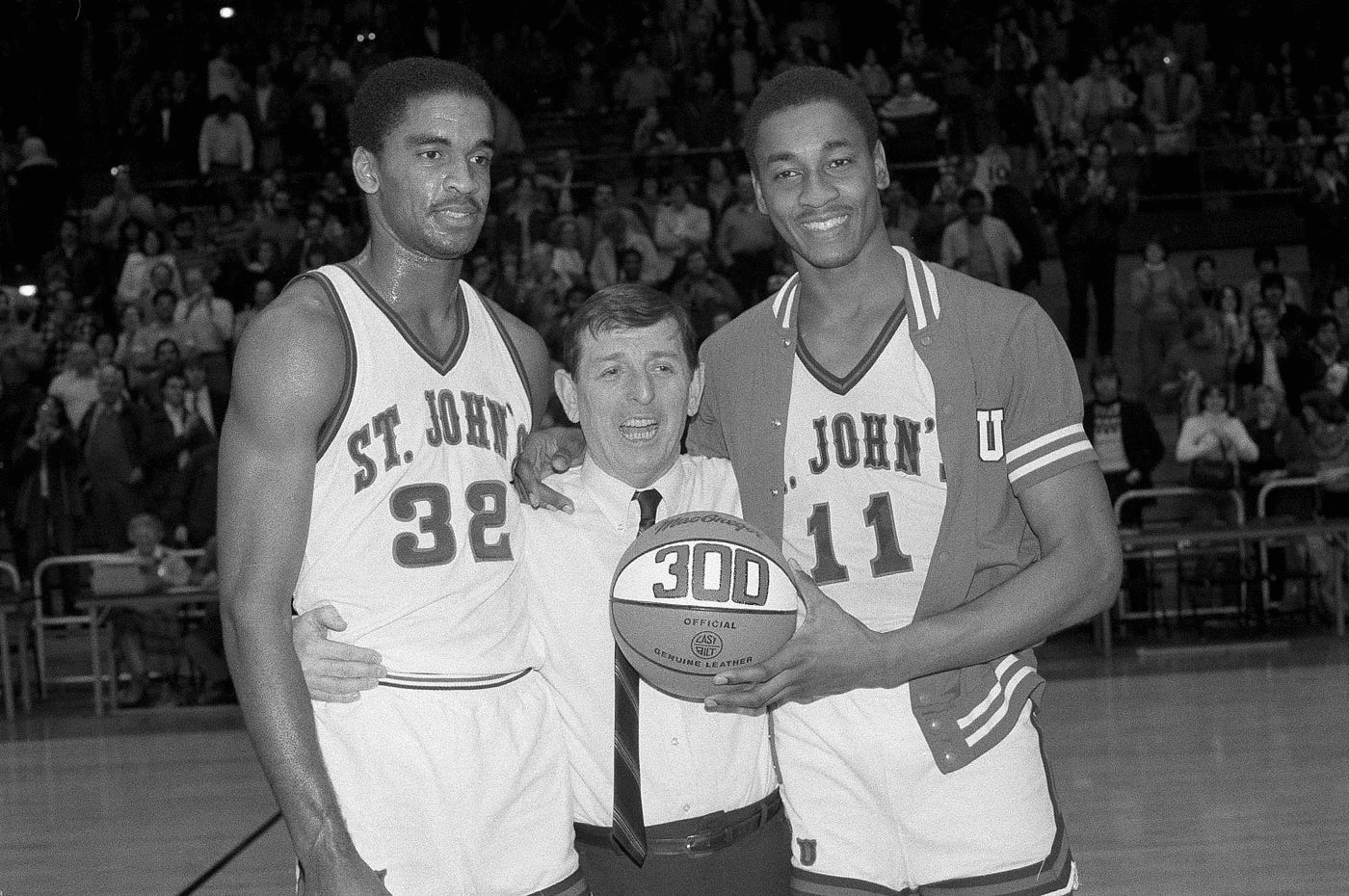
Carnesecca’s career developed without loud jumps but with steady momentum. In the 1950s, he began coaching at St. John’s, gaining experience and shaping his own approach to the game.
1965–1970 marked his first stint as head coach. The team began to compete consistently on a national level, and Carnesecca’s name appeared increasingly often in sports reviews. From 1970 to 1973, he led the New York Nets in the ABA. This venture into professional basketball broadened his managerial horizons, though college sports remained his true arena.
Returning to St. John’s in 1973 was a strategic move. It was during the period leading up to 1992 that the team secured over 500 victories, with 1985 remembered for a run to the NCAA Final Four. In 1992, he was inducted into the Naismith Memorial Basketball Hall of Fame.
Looking at this timeline coldly and without romance, a crucial detail emerges: Carnesecca built his career over a long period, systematically, step by step. This serves as a major lesson for modern coaches who often seek quick fixes instead of long-term strategy.
Coaching Mastery: The Source of His Power
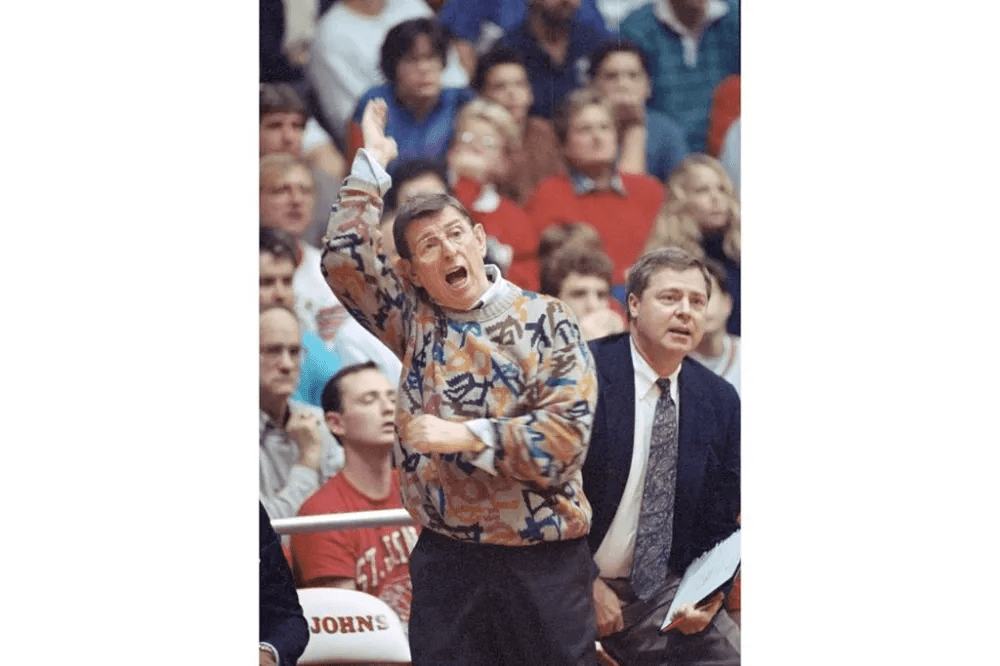
Carnesecca is often remembered for his flashy sweaters and charisma, but behind that image stood a sober, highly rational coaching system. He thought in long terms—seasons, cycles, generations of players. Lou’s teams looked emotional, sometimes even impulsive, but inside, everything was held together by discipline and precise calculation.
Carnesecca’s approach was formed back in the 1950s and 60s, as U.S. college basketball was gradually transforming into a serious national product. Carnesecca realized early on: to stay at this level, you need to build a system—from recruiting to the locker room atmosphere.
Working with Talent
One of Carnesecca’s main strengths was his ability to see potential where others saw “raw material.” This is slightly different from a coach coming in to work with established stars, as was the case with Liverpool FC manager Jürgen Klopp. Lou worked actively with New York high schools, trusted local players, and understood their mentality well. To kids from the big city, he was “one of us”—a man who knew where you came from and what to expect from you.
At the same time, he didn’t get lost in friendship. Discipline remained clear, and roles were defined. Carnesecca could joke at practice, but on game day, he demanded concentration down to the smallest detail. This balance between closeness and high standards allowed players to grow without fear, yet without unnecessary permissiveness.
Game Philosophy
The basketball played by our hero’s teams was built on a specific foundation: defense, tempo control, and team interaction. Carnesecca didn’t chase trendy schemes if they didn’t fit his specific roster. He adapted tactics to people, not people to an abstract model.
Lou paid special attention to psychology. Before big games, he might defuse the atmosphere with a joke, or intentionally heighten the tension to ensure the team came out fully focused. It wasn’t improvisation, but rather a subtle sense of the moment.
The statistics only reinforce this system: over 500 wins, 18 seasons with 20+ victories, regular NCAA tournament appearances, and the 1985 Final Four. But dry numbers don’t explain the main point—his teams knew how to adapt. And in college sports, where the roster changes almost every year, adaptability often decides the fate of the season.
The stereotypical image of Carnesecca is a charismatic coach in a bright sweater. But in reality, he was a strategist who was one of the first in his generation to systematically combine recruiting, psychology, and tactical flexibility. In the 21st century, this sounds obvious. In the 20th, it was visionary.
A Personality That Created an Atmosphere
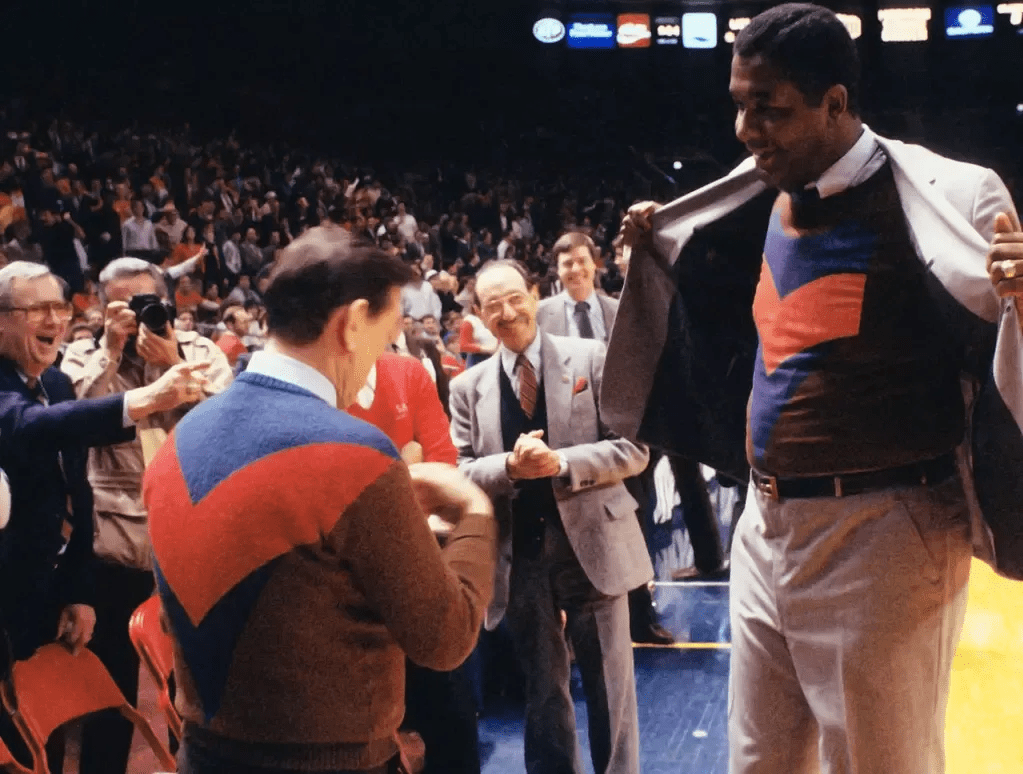
People spoke a lot about Lou Carnesecca—and almost always with a smile. He knew how to walk into a gym in such a way that the tension evaporated even before the opening whistle. But this ease was part of a thought-out behavioral model: the coach understood that a team is a living organism, and its emotional state affects the result just as much as a tactical diagram.
In college sports, where players are 18–22 years old, the coach’s character often defines the locker room microclimate. Carnesecca had a keen sense of that line: where to crack a joke, and where to put a hard stop to things. That is why he was respected even by those who didn’t always agree with his decisions.
Humanity and Humor
With his famous colorful sweaters, Lou created a colorful image for himself—a bit ironic, a bit homey. Yet behind this style stood a simple idea: not to distance himself from the players with excessive formality. The coach from Manhattan didn’t create a cold barrier between himself and the team.
Carnesecca often used humor as a tool to manage stress. Before important matches, he might say something unexpected to relieve pressure, or conversely, outline the task calmly and briefly without pomp. It worked because the players felt his sincerity.
Leader and Mentor

Carnesecca perceived athletes as people with their own stories, not just names on a score sheet. It was important to him who they would become after college—whether in professional sports or outside of them. This approach fostered trust that did not fade after their careers ended.
Many of his former players recalled that Carnesecca could be demanding to the point of toughness, but never to the point of humiliation. And this very trait distinguishes a mentor from a boss. If we analyze his impact from the perspective of modern sports management, an interesting pattern emerges: he intuitively applied what is today called the emotional intelligence of a leader. In the 20th century, it was simply a natural part of his character.