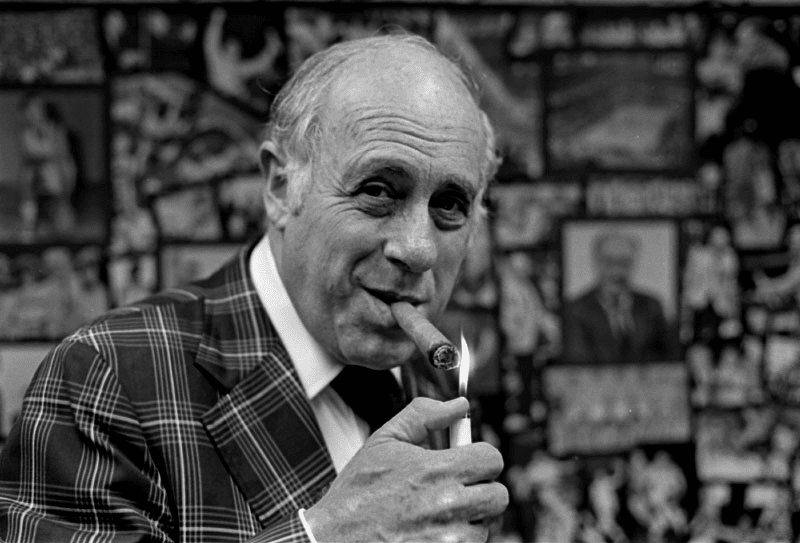

American pathologist Dr. Oscar Auerbach early confirmed the lung cancer-smoking tie-up. He is associated with breakthroughs that led millions to stop smoking altogether. The man died on January 15, 1997, at St. Barnabas Medical Center in Livingston, New Jersey. Let’s learn more about the life of this remarkable man who was instrumental in establishing the relationship between smoking and cancer. Read next up on i-manhattan.
Oscar Auerbach’s report, which had a potent influence
At the time of his death, Auerbach was 92. He lived in Short Hills, New Jersey, but was born in Manhattan, the borough of New York City.
Dr. Auerbach’s work gained national notice in 1964 when the first U.S. Surgeon General’s report on the hazards of smoking extensively cited it.
As stated by Dr. Lawrence Garfinkel, a researcher and former vice president of the American Cancer Society, his cancer research routine was one of the reasons why numerous doctors, politicians and smokers took his uncoverings more sternly than previous reports of a smoking-cancer link.
Looking at thousands of slides of human tissue, Dr. Auerbach coded each slide with the indications of cellular impairment and specified whether the person had cancer and pre-cancerous symptoms.
He could go through up to 2,000 slides a day, while others went through 200. He was vigorous. One article was based on 22,000 slides, about 50 slides from each patient.
Dr. Oscar Auerbach’s discovery, printed in the 1960s, became a discourse subject straight away and had a dynamic indelible sway. Following the Surgeon General’s report, it was determined at the state level that cigarette packs should hold a deterrent that cigarettes can be detrimental to health.
In the 1970s, an anti-smoking campaign surfaced. Non-smoking zones were necessitated in public sites by recently developed rulings.
Using slides of separate patients, Dr. Auerbach persuaded doctors that the cancer-smoking link could not be rebated.
A statistical cancer-smoking link was established by the foregoing academic work covering substantial batches of people: the more people smoke, the more they get cancer.
Dr. Auerbach went beyond statistics. He realized that the more cigarettes one smoked, the more notable the lung damage. The tissues’ appearance helped reach this inference.
The repercussions of passive smoking (i.e., inhaling smoke in the environment) were also inquired by the doctor. In articles, some of which co-authored with Dr. Garfinkel, a direct link was displayed between the volume of smoke and the grade of lung damage. He also recorded that filter cigarettes cause less damage.
Investigating patterns on dogs
Dr. Auerbach once taught dogs (86 hounds) to smoke, and 12 of them got cancer. It is considered the first case of tumors in large animals subjected to cigarette smoke. The American Cancer Society, which funded much of the research, declared that the findings virtually disprove cigarette companies’ assertions that there is no cigarettes-cancer correlation. The Tobacco Institute, an industry trade group, countered that it was unreasonable to derive conclusions from work done on dogs in strenuous laboratory tests.
Dr. Auerbach recused himself from the smoking-cancer policy. He never went to the pulpit. He was never a campaigner. He was simply a scholar and a pedagogue. This is how the man was characterized by Dr. Garfinkel.
He served on the faculty of New Jersey Medical School, part of the University of Medicine and Dentistry of New Jersey, from 1966 until his death. He gave lectures and instructed students at St. Barnabas Hospital and University Hospital until the end of his life.
His examination of slides of affected lungs revealed that a smoker who consumes a box of cigarettes a day is more prone than a light smoker to a variety of lung impairments, including hyperplasia, stratification and alterations in cell nuclei. The highest frequency of lung cancer correlated with the highest rate of smoking.

Other research showed that when patients stopped smoking, the impairment started to go away. It was an effective self-heal. The harm was fixed.
One research on the impact of his discoveries found that by 1989, 25 years after the first Surgeon General’s report on smoking, 750,000 lives had been spared as a result of people opting not to smoke.
Auerbach’s career and personal life
Dr. Auerbach was born in Manhattan and did not graduate from high school or college. After passing the entrance examinations for New York University, he entered the New York Medical College in Manhattan, where he earned his medical degree in 1929.

In the 1930s and 40s, he served for short periods at the city’s tuberculosis center at Sea View Hospital and at Halloran Hospital, both on Staten Island. From 1952, he had various jobs at the Veterans Administration Hospital in East Orange, incl. the position of chief medical examiner, which he held at the time of his death. He also lectured in diagnostics at New York Medical College for 12 years.
He studied pathology for a short time in Vienna, where he met his first wife, Dora Herman Auerbach. She died in 1984. A short second marriage to Lana Auerbach in 1985 ended in divorce. He left two sons, Richard and Bruce; a brother, William; a sister, Minnie Shlosh; and five grandchildren.