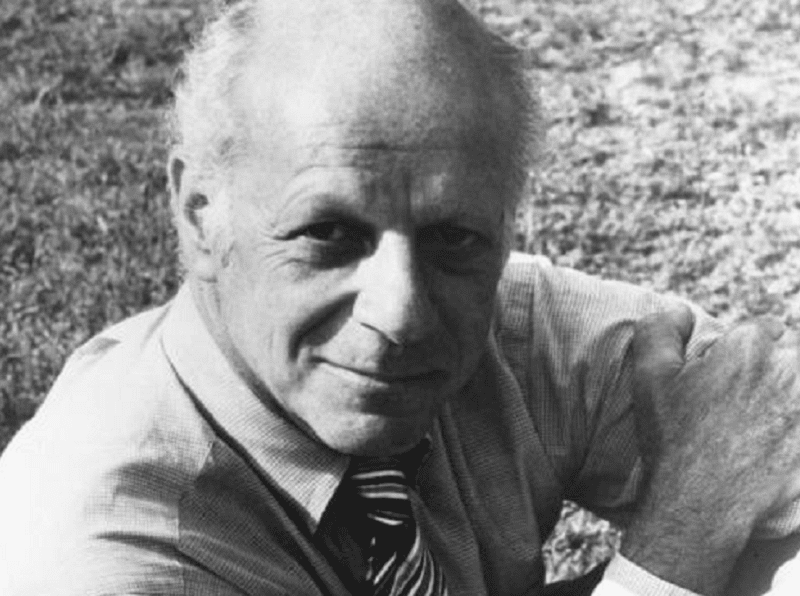

The outstanding US composer, conductor, musicologist and teacher William Schuman was born on August 4, 1910 in New York. He was one of the leading and most recognized composers in the 50-year history of music. During the entire period of his outstanding professional activity, he led a tripartite musical life and left an indelible mark in each part. Thus, he influenced the area of music education, as well as art management. He had a profound impact on the artistic and political institutions of his time and beyond. Read further on i-manhattan.
Young years and development of an outstanding composer
William was born to a Jewish family. His father Samuel Shuman and his mother Rachel Shuman named their son after US President William Howard Taft. However, family members called him Bill.
As a child, he played the fiddle and banjo but his musical pursuits were largely extracurricular. He focused his attention on jazz, which in those years was classified as Broadway music rather than the classical genre. In addition to his love for music, the boy felt an irresistible interest in baseball.
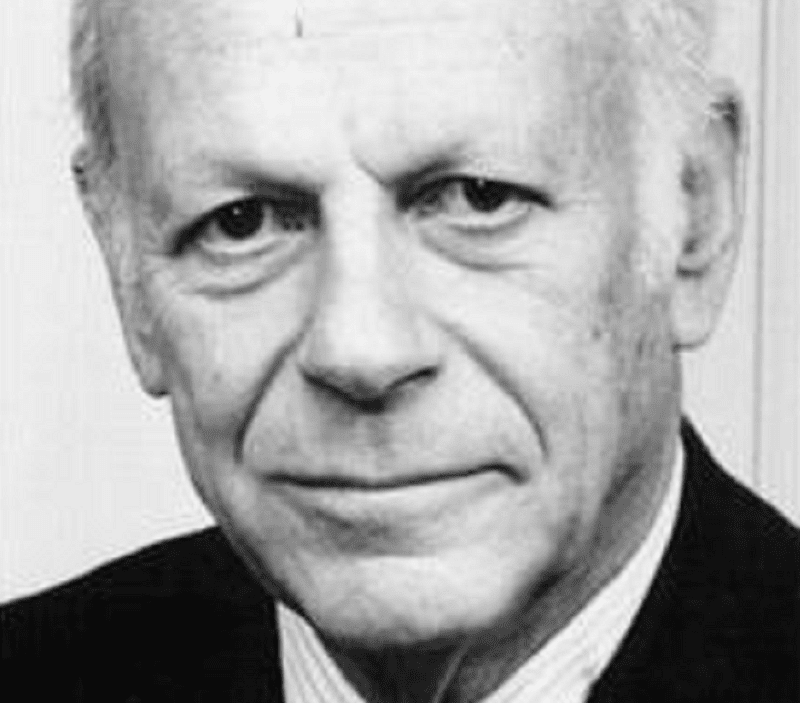
In his youth, William attended Temple Shaaray Tefila. As a student, he organized the dance ensemble Billy Schuman and his Alamo Society Orchestra and played the string bass. This creative team performed at weddings, bar mitzvahs and many other local events.
Schuman’s career in business
William Shuman’s career path could turn into a completely different field, namely business. Thus, he decided to attend New York University’s School of Commerce to get a degree in business. During the two years of study, Shuman simultaneously worked part-time in an advertising agency. While studying in high school, William began to write popular songs and continued to do it in collaboration with his summer camp friend E.B. Marks Jr. He also worked with lyricist Frank Loesser. Together they created over 40 songs. During this period, Loesser was just conquering Olympus in the field of Broadway musical theater.
Their first joint song was called In Love with a Memory of You. They created masterpieces for vaudeville, nightclubs and radio programs. None of them became hits, as well as the songs they wrote together. In his further creative activity, William collaborated with other authors. Upon reaching the age of 25, he wrote about 150 popular songs.
Schuman entered the world of classical concert music at a mature age, which is quite a common phenomenon for that time period. This cannot be said about the beginning of the 20th century when it was quite easy for a creative person to change the direction of his career at a young age.
Understanding his purpose and mission in life
William realized his desire to become a serious composer at the age of 20. This happened during a performance by the New York Philharmonic Orchestra conducted by Arturo Toscanini. Then, he decided to leave the university and begin studying music theory and composition. To make up for lost time, Schuman began to attend all kinds of concerts and operas. In 1933, he entered college at Columbia University, where he received bachelor’s and master’s degrees. From this moment, he immersed himself in musical education and improved his skills.
In 1935, he received a conductor’s certificate at the Mozarteum in Salzburg. Then, he began teaching at Sarah Lawrence College. In parallel, William studied composition with the outstanding composer Roy Harris at the Juilliard School. Harris had a profound influence on his musical creativity. At the end of the 1930s, some of Schuman’s works were already attracting the public’s attention. Aaron Copland, in an interview with Modern Music magazine dated 1938, admitted that William was the musical godsend of the year. There was nothing insignificant or small about his talent.
While teaching at Sarah Lawrence College, William held the position of Director of Publications at the most famous American publisher of classical music, G. Schirmer, Inc. In 1945, he became the director of the Juilliard School. He invited the most outstanding US composers of the time and founded the Juilliard String Quartet. It became one of the leading string quartets in America. This status remains up to modern times. Despite his incredible activity in the management and development of the school, Schuman considered himself a composer first.
In 1962, he was appointed president of Lincoln Center. The same year a significant event took place. It was the opening of the Philharmonic Hall (Avery Fisher Hall, now David Geffen Hall) as the new home of the New York Philharmonic. The new position allowed Schuman to make a positive and great impact in the world of performing arts. The main cultural institutions of New York occupied permanent premises there. In addition, Schuman implemented a number of important projects and programs, such as the Chamber Music Society of Lincoln Center, the New York Philharmonic’s summer concerts, summer offers for visiting opera, the Film Society and the Student Program of Lincoln Center.
The death and legacy of the great composer
Unfortunately, a heart attack in 1968 forced Schuman to resign. From that moment, William fully concentrated only on creating compositions. Schuman got the title of president emeritus and continued to participate in Juilliard. In addition, he shared his administrative experience by consulting numerous prestigious organizations and companies.
Laureate of the first Pulitzer Prize in the field of music, Schuman composed music that was rhythmically feverish, harmonically sharp, melodically long and timbral brilliant. As president of the Juilliard School of Music and Lincoln Center, he simultaneously pushed the boundaries of music education and championed the performing arts.
Symphony No. 3 (1941), A Free Song (Secular Cantata, 1942) and Symphony for Strings (1943) became one of the most famous works of William Schuman. Symphony No. 3 brought Schumann the first prize of the Music Critics Association and proved his status as a prominent composer. He got the first Pulitzer Prize in the field of music for A Free Song.
Schuman was one of the leading and most recognized US composers. He led a tripartite musical life and left an equally noticeable mark in the field of music education and art management.
William Shuman died at the age of 81 in a New York hospital after hip surgery. At the time of his death, his wife Frances, whom he married in 1936, was still alive, as well as their two children and one grandchild.