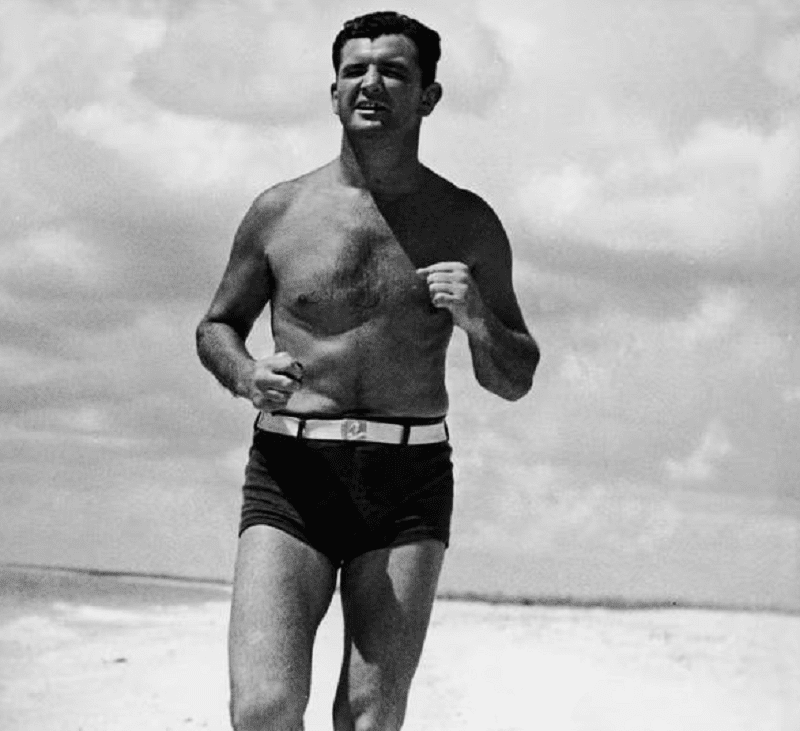

James Walter Braddock was a renowned American boxer and the world heavyweight champion from 1935 to 1937. Born on June 7, 1905, in Manhattan, New York City (in the Hell’s Kitchen neighborhood), Braddock’s journey to becoming a celebrated athlete is a compelling story. He famously believed he had “more muscle than brains” yet possessed a phenomenal ability to turn even the direst situations to his advantage, overcoming falls to reach new heights. Read on at i-manhattan to learn more about his formative years. More on i-manhattan.com.
Childhood, Early Life, and Career Choice
James Walter Braddock was born on June 7, 1905, into a large immigrant family with seven children. His father, Joseph Braddock, had Anglo-Irish roots, while his mother, Elizabeth O’Toole, was of Irish descent. The family resided in the Hell’s Kitchen area on West 48th Street in Manhattan before relocating to North Bergen, New Jersey, during James’s early childhood.
Driven by youthful ambition, James initially dreamed of becoming a professional football player for Knute Rockne’s Notre Dame team. However, this was not to be. As the future boxer himself admitted, it was because he had “more muscle than brains.”
Braddock’s first fight took place on November 27, 1923, in the light heavyweight division. He turned professional at the age of 21. When performing publicly, Braddock adopted the name James J. Braddock, following the example of two previous world boxing champions (James J. Corbett and James J. Jeffries). His manager advised him to change his name to a professional pseudonym.
The Famous Boxer’s Career
In 1928, James Walter Braddock suffered a defeat against the respected Tuffy Griffiths. The following year, he lost a bout to Tommy Loughran. This loss not only plunged the athlete into a state of depression but also resulted in serious physical injuries. In the fight with Loughran, Braddock broke his right hand in two places, which delivered a blow to his morale, character, and career.
During the Great Depression, James Walter Braddock was forced to temporarily leave boxing. He received public assistance due to his chronic hand injury and worked as a longshoreman to support his family. The injury to his right hand compelled Braddock to work with his left, significantly strengthening it.
In 1935, James made a comeback to boxing. In a fight against Max Baer, Braddock defeated him and earned the title of world heavyweight champion. After this unlikely victory, the boxer was nicknamed the “Cinderella Man.” Following his spectacular return to boxing and his successful capture of the prestigious title, James Walter Braddock decided to repay the public assistance he had previously received from the government, recalling the humiliating feeling of having to survive on state benefits. Furthermore, he regularly contributed to various charitable organizations and, along with his family, fed homeless people.
James J. Braddock’s Fight with Max Baer
In 1934, a highly publicized fight was anticipated against boxer John “Corn” Griffin. James J. Braddock’s bout with John Corn Griffin was intended as an intermediate step for Griffin’s future career; however, Braddock knocked him out in the 3rd round. Next, James J. Braddock fought John Henry Lewis and broke Art Lasky’s nose during their fight. A series of victories earned the boxer a title fight against the world heavyweight champion, Maximilian Adalbert Baer (Max Baer).
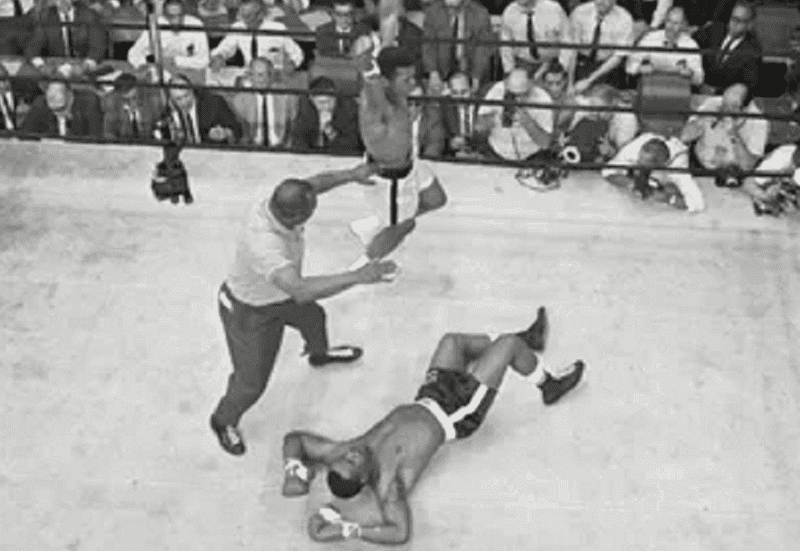
Photo source: https://www.britannica.com/
Despite James J. Braddock’s impressive previous victories, Max Baer’s trainers considered him an easy opponent. However, they were mistaken. On June 13, 1935, James J. Braddock won the final heavyweight bout against Max Baer with a 10:1 odds victory, which went down in world boxing history as “the greatest fistic upset.”
James J. Braddock’s Personal Life, Death, and Legacy
In 1930, James J. Braddock married Mae Fox. The couple had three children: James (Jay) Jr., Rosemary, and Howard.
After ending his sports career, Braddock enlisted in the U.S. Army, where he became a first lieutenant. He trained servicemen in the intricacies of hand-to-hand combat in the Pacific Theater of Operations.
Upon returning from service, Braddock worked in marine equipment surplus and, in the early 1960s, helped construct the Verrazzano-Narrows Bridge. He was a member of the Fairview Teeko Club in New Jersey.
On November 29, 1974, James J. Braddock passed away and was buried at Mount Carmel Cemetery in Tenafly, New Jersey. He was 69 years old at the time of his death.
In 2001, James J. Braddock was inducted into the International Boxing Hall of Fame. A biographical film, “Cinderella Man,” was made about the famous boxer, starring Russell Crowe in the lead role. His wife, Mae Fox, was played by actress Renée Zellweger. The film received positive reviews from moviegoers and grossed $108.5 million at the box office.