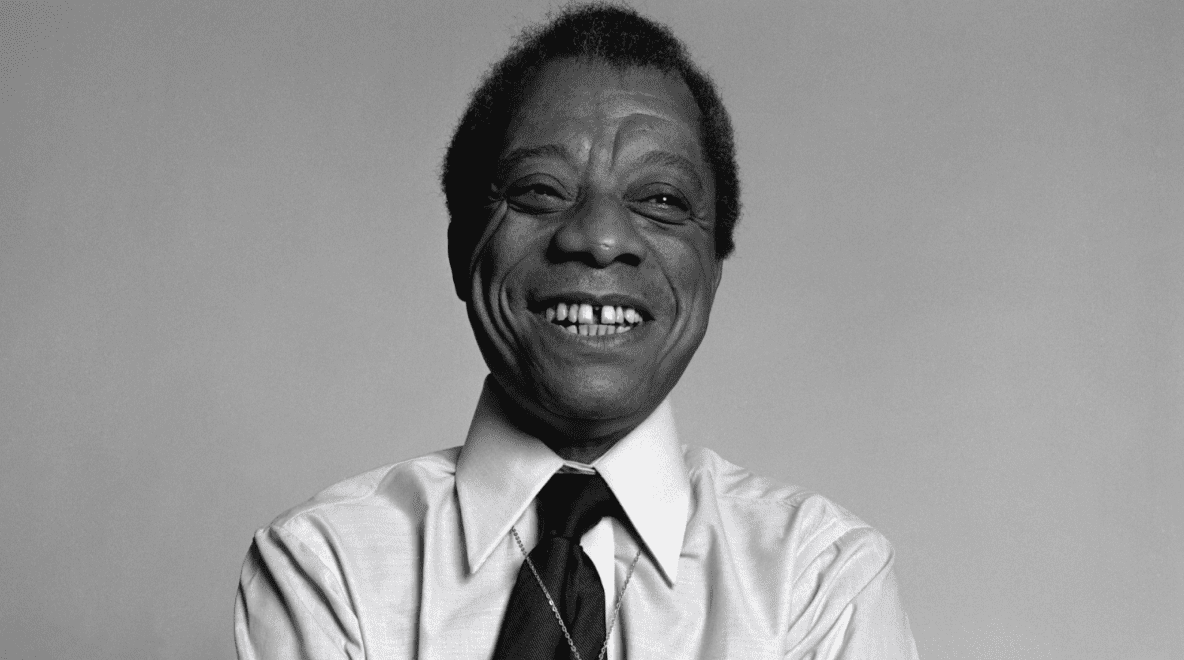

This article is about the American writer who gained acclaim for his novels, plays, essays, and poems. Learn more about the childhood, formative years, and career of writer James Baldwin at i-manhattan.

Early Years
James Arthur Baldwin was an American writer. He was born on August 2, 1924, at Harlem Hospital in Manhattan. His mother, Emma Berdis Jones, was one of many who fled racial segregation and discrimination during the Great Migration. She arrived in Harlem at age 19, where she gave birth to her son, James, out of wedlock. In 1927, Jones married David Baldwin, a factory worker and Baptist preacher. Emma and David Baldwin would go on to have eight children together, and James later took his stepfather’s surname. Although the boy called his stepfather “Father,” they had a difficult relationship and would sometimes nearly come to blows. The conflicts often stemmed from James’s interactions with white people, his reading habits, and watching movies—activities his stepfather believed threatened James’s Christian salvation. Toward the end of his life, David Baldwin developed paranoid tendencies and was committed to a mental hospital, where he died shortly after.
As the eldest child, James Baldwin worked from a young age to help support his family. He was shaped not only by the difficult relationships at home but also by the poverty and discrimination he witnessed all around him, where crime, prostitution, and drug addiction were rampant. Baldwin later wrote that he felt he had no childhood and no human identity, only a sense that he had been “born dead.”
Baldwin received his elementary education at Public School 24 (P.S. 24) on 128th Street in Harlem. From the start, his teachers recognized his talent and encouraged his pursuits in research and writing. By the fifth grade, he had already read works by Fyodor Dostoevsky, Harriet Beecher Stowe’s “Uncle Tom’s Cabin,” and Charles Dickens’s “A Tale of Two Cities.” After elementary school, he attended Frederick Douglass Junior High School in Harlem. In 1938, Baldwin applied and was accepted to DeWitt Clinton High School, where he worked on the school’s literary magazine, “The Magpie.” It was also during his school years that he realized he was more attracted to men than to women, leading him to seek refuge in religion for a time. In 1937, James joined a Pentecostal church.

Later Formative Years
After high school, James Arthur Baldwin entered the workforce, where he faced racial hostility from his white co-workers from the South. He chronicled these incidents in one of his early essays, “Notes of a Native Son.” Due to various challenges, he was forced to change jobs frequently, all while battling nervous breakdowns, depression, and alcoholism. During this period, the writer also explored his sexual identity and dated men. In 1947, James published his first literary piece, a review of Maxim Gorky’s “Best Short Stories,” in “The Nation.” Baldwin’s first essay, “The Harlem Ghetto,” was published a year later in “Commentary,” in which he explored antisemitism among Black Americans. Soon after, he published his second essay, “Journey to Atlanta,” using diary entries from his younger brother David, who had traveled to Atlanta. By 1948, the writer published his first work of fiction, a short story titled “Previous Condition,” about a young Black man being evicted from his apartment, which served as a metaphor for his rejection by white society.

Career Development
At 24, James settled in Paris, seeking to escape racial discrimination and come to terms with his sexual orientation, as he did not want to be pigeonholed as a “Black writer.” His life in Paris was nomadic and marked by poverty. In 1953, he released the semi-autobiographical novel “Go Tell It on the Mountain,” which Time magazine later named one of the 100 best English-language novels. Baldwin went on to write other notable works, such as “A Question of Identity,” which explored his perception of the incompatibility between Black Americans and Black Africans in Paris. He also published “Preservation of Innocence,” which traced violence against homosexuals in American life. He published the essay “Everybody’s Protest Novel” in “Commentary” about African American literature, as well as “Death of the Prophet.” In December 1949, James was arrested and jailed for receiving stolen goods; after his release, he wrote about the experience in his essay “Equal in Paris.” Soon after, he also released “Everybody’s Protest Novel” and “Many Thousands Gone.” In the 1950s, he decided to return to the United States. During the 1960s, he released works such as “Another Country,” “Tell Me How Long the Train’s Been Gone,” “This Morning, This Evening, So Soon,” and “Fifth Avenue, Uptown: A Letter from Harlem.” In the 1970s and 1980s, his works included “If Beale Street Could Talk,” “Just Above My Head,” “The Evidence of Things Not Seen,” “The Price of the Ticket,” and “An Open Letter to Mr. Carter.” The writer penned several of his final works at his home in Saint-Paul-de-Vence, including “Just Above My Head” and “The Evidence of Things Not Seen.” Writer James Arthur Baldwin died of stomach cancer on December 1, 1987, in Saint-Paul-de-Vence. He was buried at Ferncliff Cemetery.