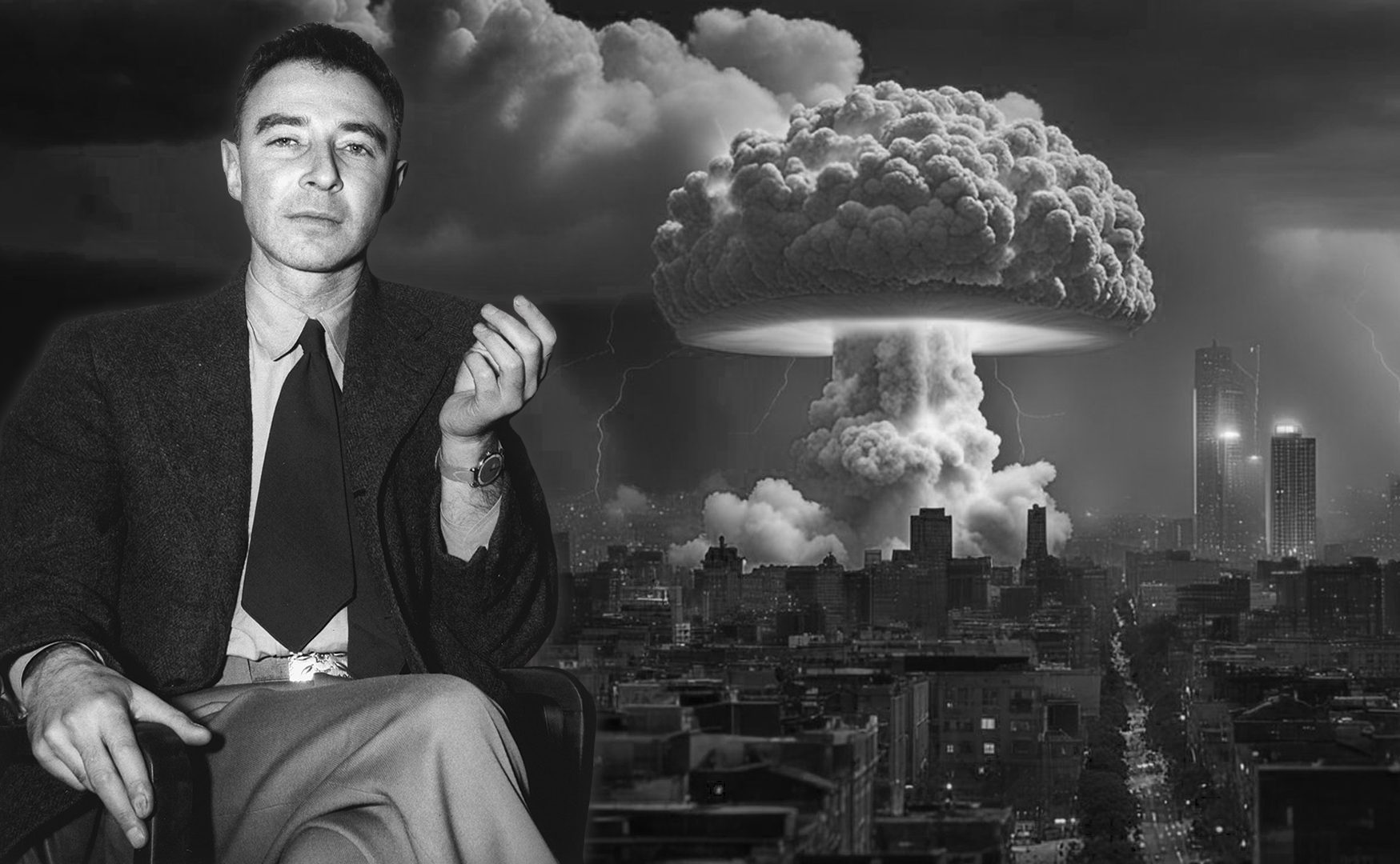

The name Robert Oppenheimer is known far beyond American borders. He was a theoretical physicist, widely recognised as the scientific director of the Manhattan Project, which developed the first nuclear weapons during World War II. We’ll delve deeper into Oppenheimer’s life and innovations on i-manhattan.com.
Youth, academic career
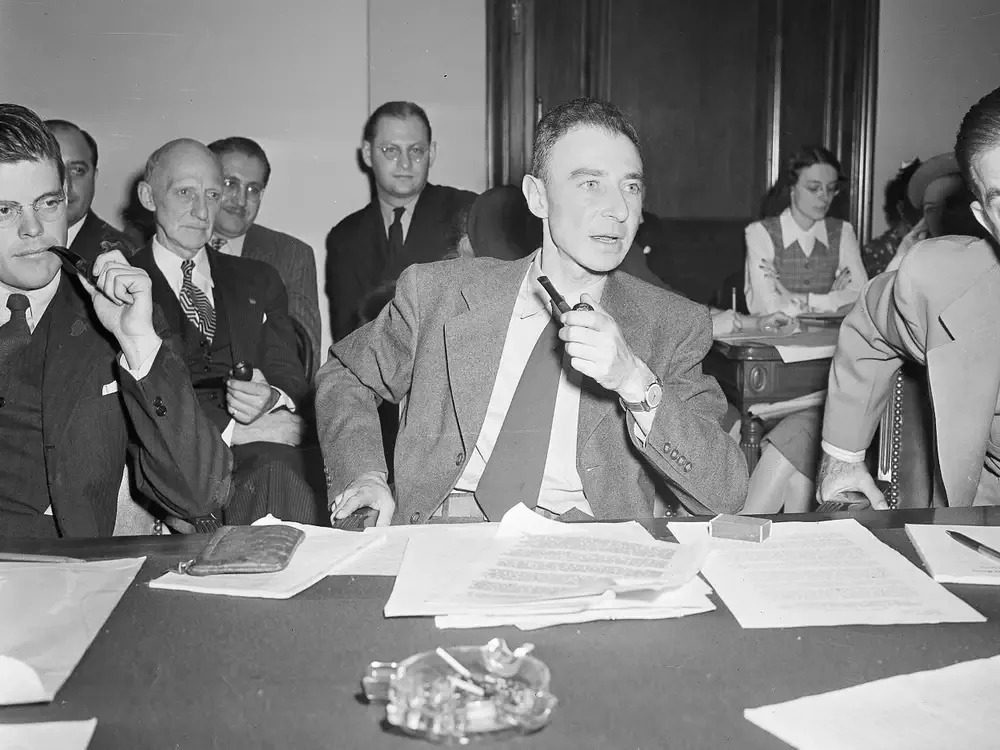
Julius Robert Oppenheimer was born on April 22, 1904, in Manhattan, growing up in an apartment adorned with paintings by Van Gogh, Paul Cézanne, and Gauguin. His father ran a family textile import business, while his mother, Ella Friedman, was a talented artist. Robert was not an only child; he had a younger brother, Frank, who also became a successful physicist.
In 1921, Robert graduated from the Ethical Culture School of New York with honours. He then enrolled at Harvard University, where he studied mathematics and natural sciences, alongside philosophy and Eastern religions. Remarkably, in his first year of undergraduate studies, Oppenheimer was admitted to the physics graduate program based on independent study. During a thermodynamics course led by Percy Bridgman, a Harvard physics professor, Oppenheimer was introduced to experimental physics, which quickly captured his attention. In 1925, after completing his postgraduate work, Robert joined the Cavendish Laboratory at Cambridge University as a research fellow under J.J. Thomson.
The work at the lab didn’t appeal to the young man; it felt routine and tedious. Soon after, he left for the University of Göttingen in Germany to study quantum physics. Oppenheimer studied under some of the most eminent figures of the time, including Max Born and Niels Bohr, earning his Ph.D. there at the age of 22. During this period, Robert also published numerous essential papers on the then newly developed quantum theory, most notably a paper on the so-called Born–Oppenheimer approximation, which separates nuclear motion from electronic motion in the mathematical treatment of molecules. In 1927, Robert returned to Harvard to study mathematical physics and become a National Research Council fellow, and in early 1928, he entered the California Institute of Technology (Caltech).
In 1929, Oppenheimer was invited to teach at both Caltech and the University of California, Berkeley. Accepting both offers, he skilfully split his time between Pasadena and Berkeley, building a group of brilliant young physics students. Physicist Hans Bethe noted that Oppenheimer’s lectures were a valuable experience for students. Beyond his superb literary style, Robert brought a depth of physics knowledge previously unseen in the US.
Oppenheimer is considered one of the founders of the American school of theoretical physics. He conducted crucial research in astrophysics, nuclear physics, spectroscopy, and quantum field theory. Furthermore, he contributed to the theory of cosmic ray showers and performed work that eventually led to the description of quantum tunnelling. In the 1930s, he was the first to publish papers suggesting the existence of what we now call black holes.
In 1937, Robert’s father passed away, and his entire inheritance went to him. In 1940, Oppenheimer married Katherine Harrison, a biologist. The couple had two children, Peter and Katherine.
Manhattan Project
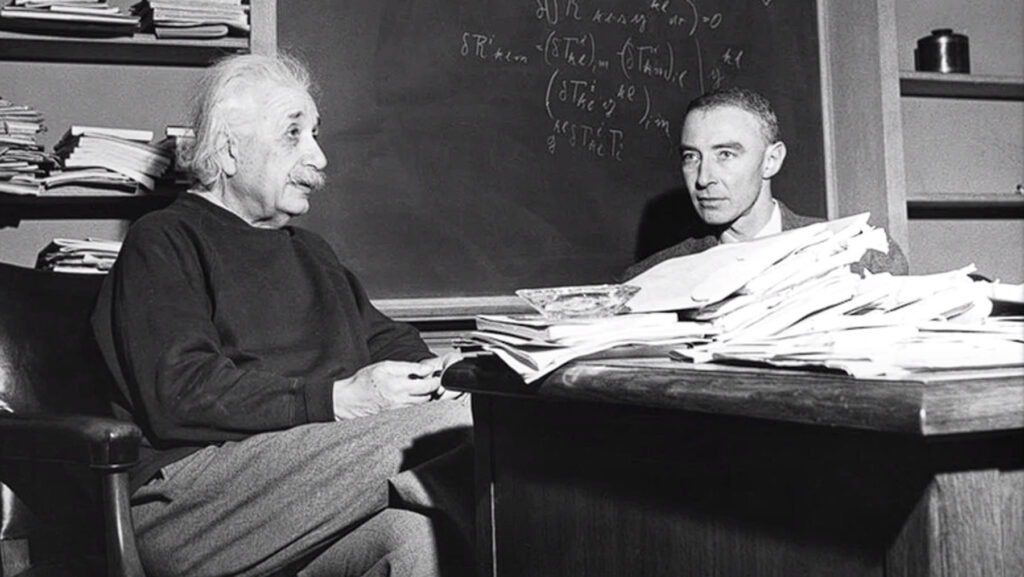
In 1939, physicists were far more concerned about the nuclear threat than politicians. Albert Einstein’s letter first brought the issue to the attention of the US government’s top leadership. The reaction was slow, but alarm continued to spread within the scientific community, eventually convincing the President to act immediately. As one of the country’s leading scientists, Robert began seriously studying the potential of nuclear weapons.
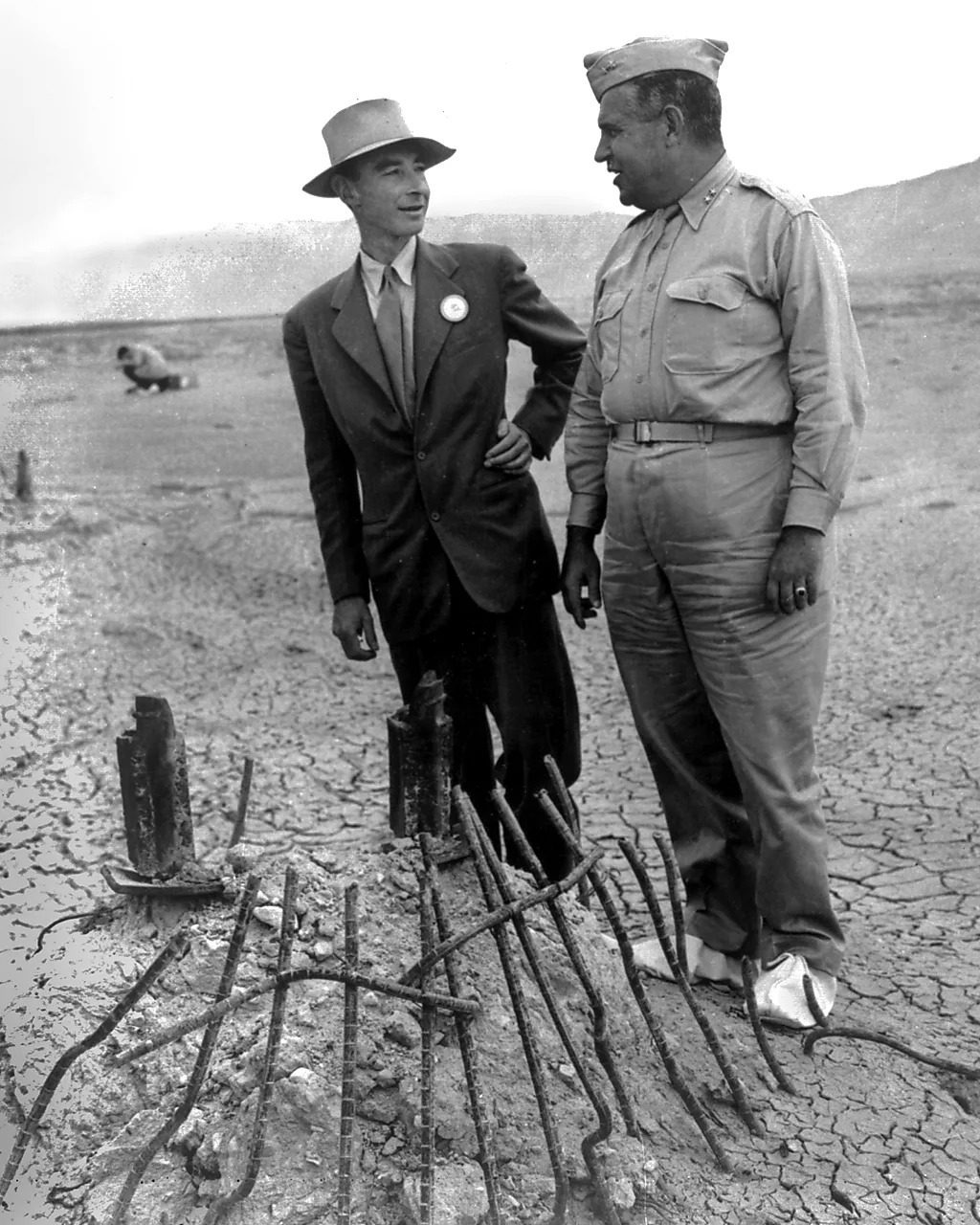
World War II disrupted the work and lives of most American physicists. In 1942, Oppenheimer enthusiastically threw himself into the development of the atomic bomb, which was consuming significant resources and time at the Lawrence Radiation Laboratory in Berkeley. Initially, Robert focused on neutron calculations, and in June of the same year, General Leslie Groves appointed Oppenheimer the scientific director of the Manhattan Project. Importantly, this project spanned several secret laboratories across the country, including those at the University of Chicago and in Tennessee, among others. Under Oppenheimer’s leadership, laboratories were built at Los Alamos. He successfully recruited the best physicists to work on the problem of creating the atomic bomb. In the end, Robert managed over 3,000 people and tackled various theoretical and mechanical issues. He is frequently called the “father” of the atomic bomb. Crucially, the collaborative work of the scientists at Los Alamos culminated in the world’s first nuclear explosion at Alamogordo on July 16, 1945, which Oppenheimer dubbed “Trinity.”
During the bomb’s development, Robert repeatedly told colleagues that as scientists, they bore no responsibility for the decision of how the weapon should be used, only for their work. The bloodshed would be on the hands of politicians.
Political persecution, denial of access to classified information
After World War II ended, the government established the Atomic Energy Commission (AEC), tasked with overseeing all atomic research and development in the US. Oppenheimer was appointed chairman of its General Advisory Committee, a post he held from 1947 to 1952. Oppenheimer strongly opposed the development of the hydrogen bomb, which was an astonishing 1,000 times more powerful than the atomic bomb. Amid the Cold War, with the US and the USSR vying for supremacy, Oppenheimer’s stance was controversial.
In the 1950s, at the height of anti-communist sentiment in the US, Robert was accused of having communist sympathies. His security clearance was revoked, and, even worse, he was removed from his position as chairman. Oppenheimer was subjected to an investigation that became scandalous, causing a rift within the intellectual and scientific communities.
Robert’s concern about the public’s insufficient understanding of science, and the difficulty in communicating the essence of scientific discoveries, led him to write several essays on science. In 1953, he delivered the Reith Lectures on the BBC, which were soon published under the title Science and the Common Understanding.
In April 1962, the US government offered a measure of atonement for Oppenheimer’s earlier persecution. This occurred when former President John F. Kennedy invited the scientist to a White House dinner with Nobel laureates. In 1963, former President Lyndon B. Johnson honoured Robert with the AEC’s highest award, the Enrico Fermi Award.
The last years of his life
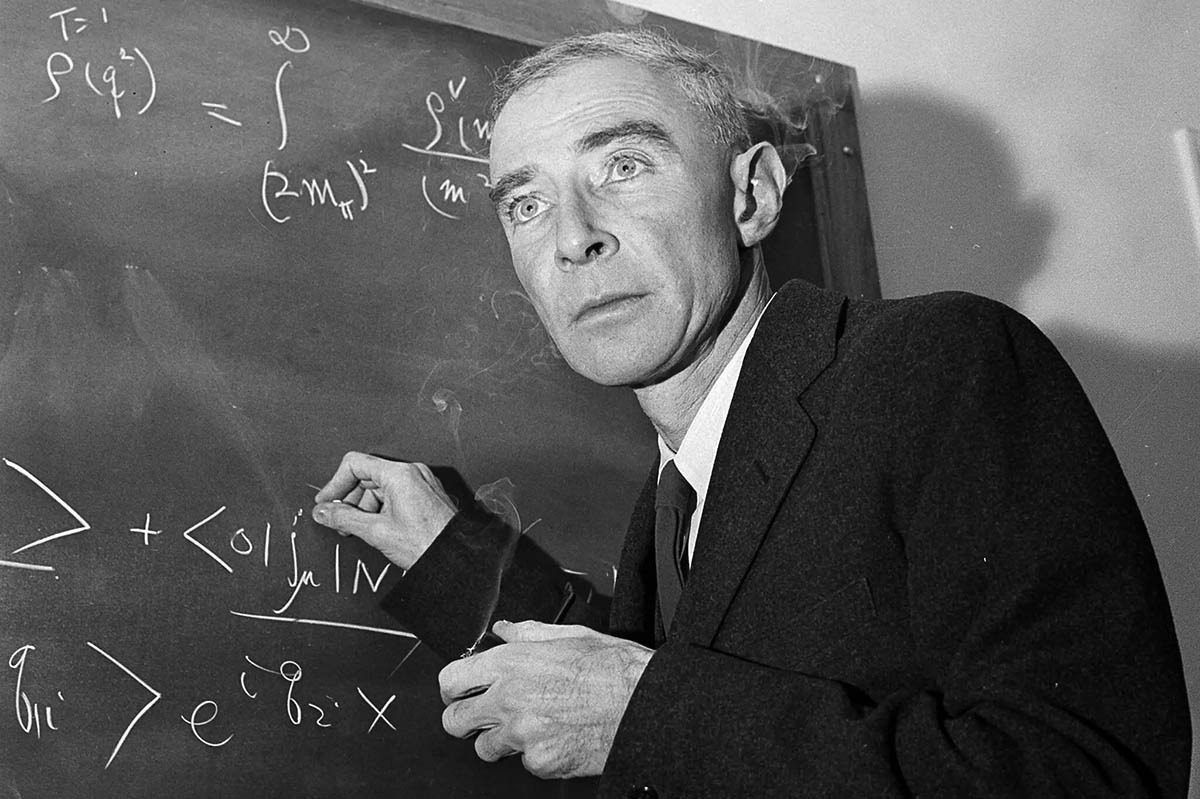
From 1947 to 1966, Robert Oppenheimer also served as the Director of the Institute for Advanced Study at Princeton University. There, he fostered discussions and research in quantum and relativistic physics within the School of Natural Sciences.
Throughout the final decades of his life, Oppenheimer consistently expressed both pride in the technical achievement of creating the bomb and a sense of guilt over its consequences. A note of humility also permeated his statements, and he often reiterated that the bomb was simply inevitable.
On February 18, 1967, the great scientist and innovator, Robert Oppenheimer, passed away at the age of 62.