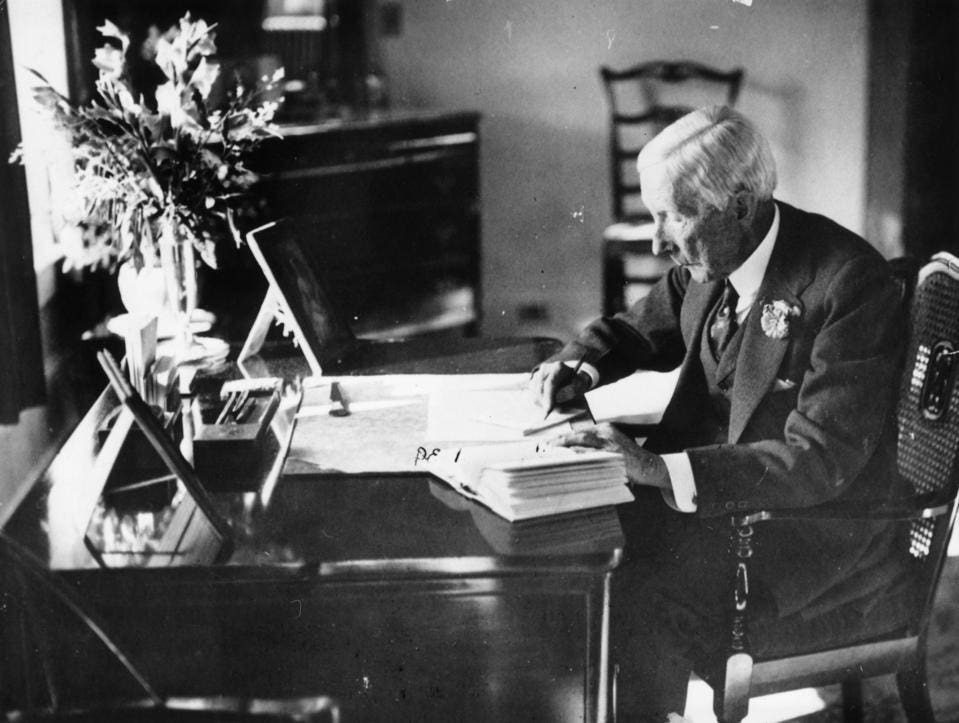

John Davison Rockefeller’s name is known worldwide. In 1916, he officially became the first dollar billionaire in human history. Thanks to his diligence and rational handling of money, this man secured significant financial well-being for himself and his great-grandchildren, as i-manhattan.com reports.
Childhood and Early Adulthood
John was born in 1839 into a modest family living in the northern part of New York State. His mother was a strict and deeply devout Baptist, while his father was a cheerful man who called himself a travelling salesman but was, in fact, a con artist. Importantly, during his numerous long trips, the family patriarch started a second family but periodically returned to the first. John’s mother had a great influence on him, raising her son strictly, which made him somewhat devoid of a sense of humour. In 1853, the Rockefeller’s moved to Strongsville, Ohio. There, John began attending the local high school and completed a 10-week course in bookkeeping. At the age of 16, he started working as a bookkeeper for a brokerage firm that traded fresh produce. From the very beginning, the young man donated 6% of his salary, which was 50 cents a day, to charity. Soon after, he began tithing to the Baptist church.
The Oil Tycoon
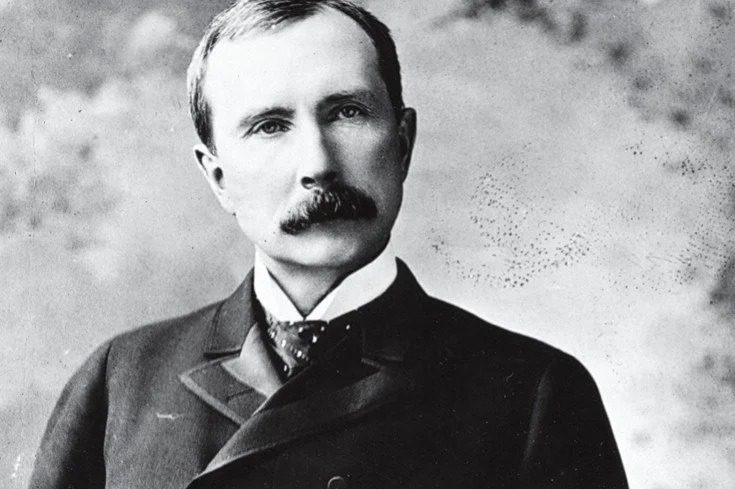
In 1859, Edwin Drake drilled the first oil well in northwestern Pennsylvania, giving birth to one of the world’s largest industries. That same year, John, and his partner opened their own brokerage firm, Rockefeller and Clark, which traded not only agricultural products but also petroleum products. Cleveland quickly became a centre for oil refining, thanks to its proximity to the Pennsylvania oil fields and an excellent transportation network. In 1863, Rockefeller and his partners opened their own oil refinery.
By the age of 40, Rockefeller dominated the rapidly developing oil industry, soon becoming the wealthiest man of his era. At the peak of his career, John’s fortune was about 1.5% of the country’s total annual economic output, which is equivalent to approximately $280 billion today.
In 1865, John bought out his partners’ shares and founded a new firm with the chemist Samuel Andrews. Needing capital, he turned to Stephen Harkness, who invested $100,000 and became a passive partner in the company. Soon, Harkness demanded that his relative, Henry Flagler, also become a partner to oversee his personal interests. Flagler proved to be an excellent choice, as his organisational and business skills perfectly complemented Rockefeller’s cautious financial management.
In 1870, Flagler persuaded John to convert the Rockefeller, Andrews, and Flagler partnership into a corporation named Standard Oil. After its founding, it expanded rapidly, buying up other refineries, transport routes, and selling oil at retail. The corporation sought a monopoly, employing various methods, such as secret rebates from railroads and predatory pricing, which are now considered illegal but were not at the time. Standard Oil adopted a trust form of organisation to bypass company incorporation laws. It paid a fair price for the companies it purchased. By 1880, Standard Oil controlled 90% of the oil business in America.
Philanthropic Endeavours
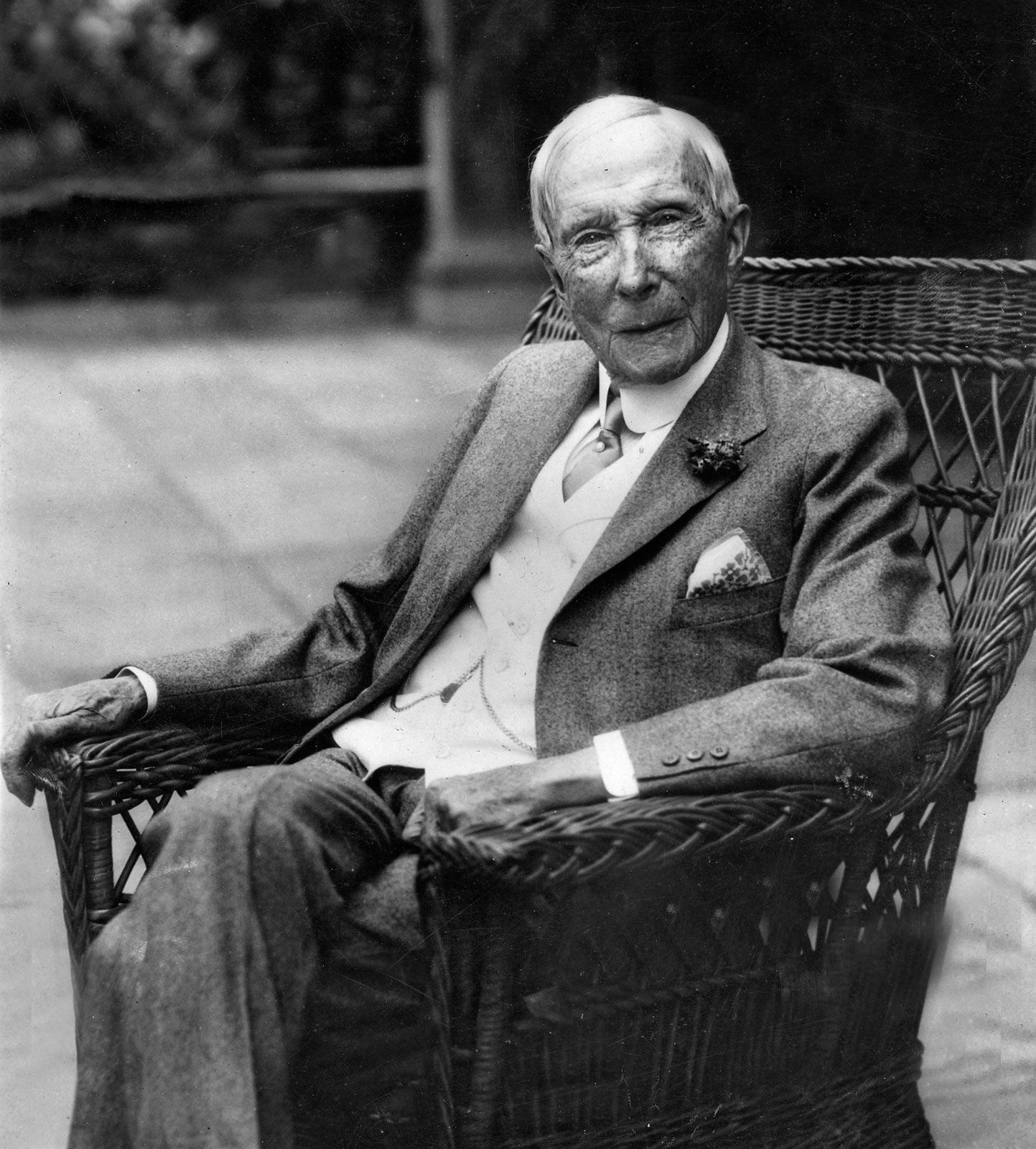
Rockefeller was completely at ease about how he made his fortune, believing that the money was given to him by God. In the early 1880s, he received thousands of letters monthly asking for assistance. John regularly gathered his family after breakfast to read the people’s requests.
In the early years of his large-scale charitable work, Rockefeller favoured a few causes close to his heart. He was the most generous donor to the Northern Baptist Conventions and funded the work of missionaries and relief workers at home and abroad. Rockefeller also showed a deep interest in higher education. In 1882, John began a series of donations to the struggling Atlanta Baptist Female Seminary, an educational institution for African American women. As Rockefeller’s donations increased, the institution adopted the maiden name of John’s wife—Spelman. Soon, similar donations were directed to two other colleges for Black people—Tuskegee University and Morehouse College. In his 1909 memoirs, John wrote that the habit of giving had driven him to a nervous breakdown. He constantly faced the need to organise and plan his daily affairs around clear directions for development.
John managed to earn millions through thoughtful consolidation, meticulous cost management, and economies of scale. These skills were repeatedly reflected in his charitable activities. He made large donations to organizations he considered promising.
Founding the University of Chicago and the Rockefeller Institute for Medical Research
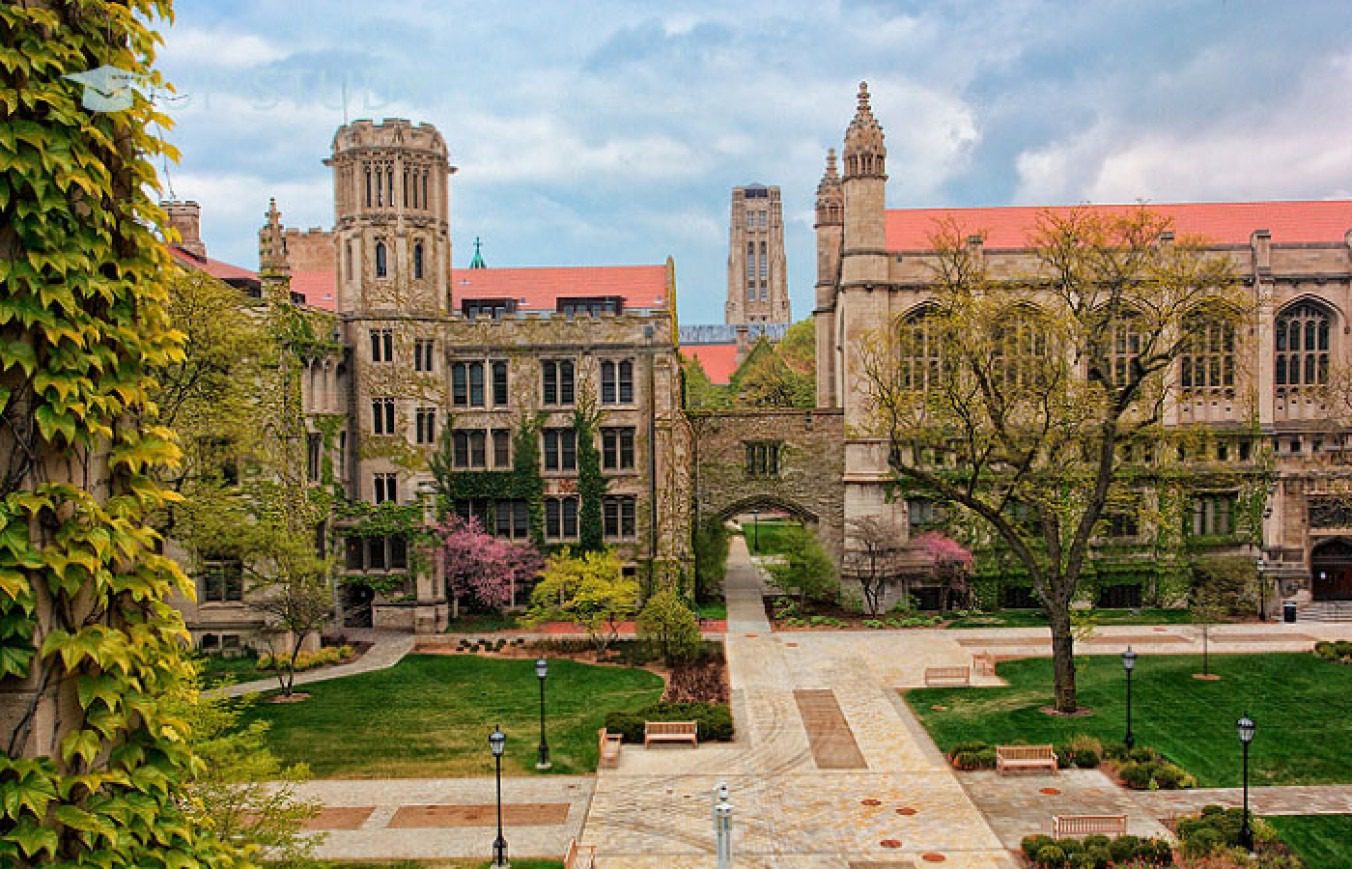
Higher education was the first major beneficiary of John Rockefeller’s more focused philanthropic efforts. He explored several options before partnering with William Harper to establish the University of Chicago. In 1890, the businessman made an initial contribution of $600,000 to the educational institution. Throughout his lifetime, he allocated over $35 million to the university’s development, helping it become one of the most prestigious higher education institutions in the world. Rockefeller insisted that his name not be mentioned anywhere on campus, even rejecting the image of a lamp on the university’s seal so it would not be perceived as a nod to Standard Oil’s influence.
At the insistence of Frederick Gates, John devoted himself increasingly to medical research. In 1901, he founded the Rockefeller Institute for Medical Research in New York. Modelled after the Pasteur Institute in France, it became the country’s first biomedical institute, soon rivalling its European counterparts. Within a decade, the institution developed a vaccine for cerebrospinal meningitis and supported the work of the first American Nobel laureate in medicine.
Like many prominent industrialists of his era, Rockefeller was disturbed by the poverty that still plagued the American South almost half a century after the Civil War ended. In 1902, he created the General Education Board, charging it with a broad mission that included improving rural education for both white and Black people, as well as modernising agricultural practices and improving public health. Consequently, during the organisation’s existence, hundreds of public schools were established in the South, higher education institutions were promoted, and efforts to train teachers for African Americans were supported.
Starting in 1913, with Rockefeller’s support, a campaign to combat hookworm spread globally. This was soon followed by similar efforts to fight malaria, scarlet fever, and tuberculosis under the aegis of the Rockefeller-funded International Health Commission. In 1918, John established the first School of Public Health and Hygiene at Johns Hopkins University. In total, he spent $25 million to implement public health programs in dozens of universities worldwide.
All these good deeds led to John Rockefeller being hailed as America’s greatest philanthropist in history. His contribution to the development of healthcare, education, and other fields is hard to overstate. John Rockefeller died on May 23, 1937, at the age of 97. He was buried in Lake View Cemetery in Cleveland.