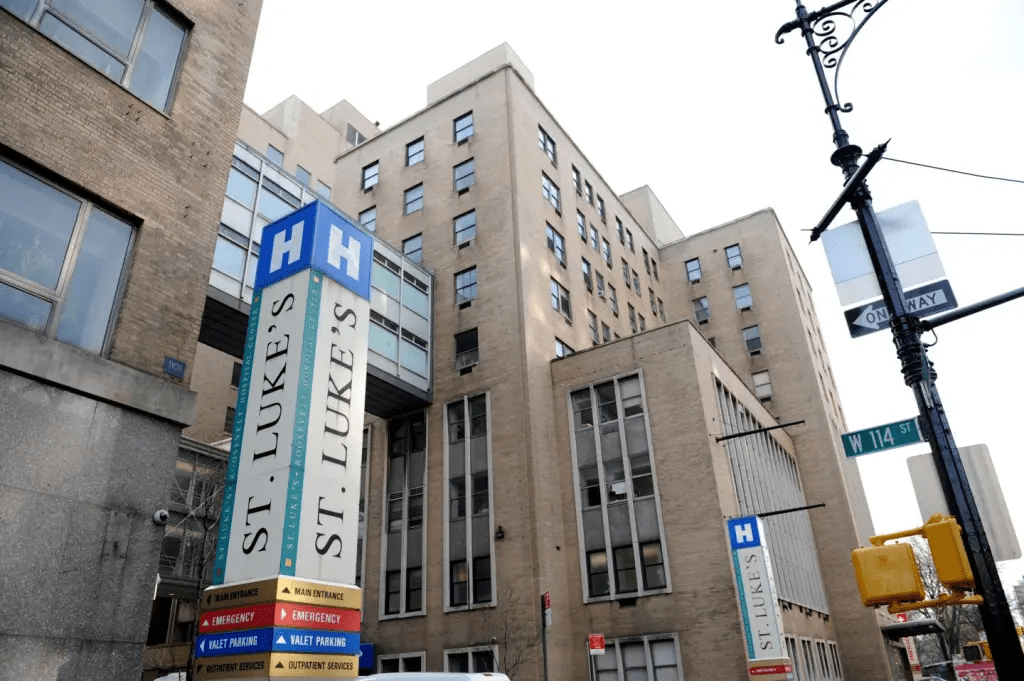

Mount Sinai Morningside is an important part of New York’s healthcare system. The hospital specializes in various fields, including cardiology/cardiovascular surgery, oncology, bariatrics, diabetes, geriatrics, neurology, endocrinology, nephrology and more. Read about the establishment, construction and development of Mount Sinai Morningside at i-manhattan.
Establishment of the hospital
Mount Sinai Morningside is a well-known American hospital located in Morningside Heights, Manhattan.
The hospital was founded in 1850 by Episcopal pastor William Muhlenberg and was initially named Mount Sinai St. Luke’s. In 1853, the new institution welcomed its first patients, who were mostly Christians. The hospital was originally located on Sixth Avenue at 20th Street. Shortly after, the clinic purchased a plot of land on Fifth Avenue between 54th and 55th Streets. A new brick building in the Romanesque Revival style was designed by John W. Ritch. The hospital began operating in its new premises in 1858. In 1888, a nursing school was established. It is also worth noting that by 1892, Mount Sinai St. Luke’s had already served nearly forty thousand patients, which is a high figure.
Great construction
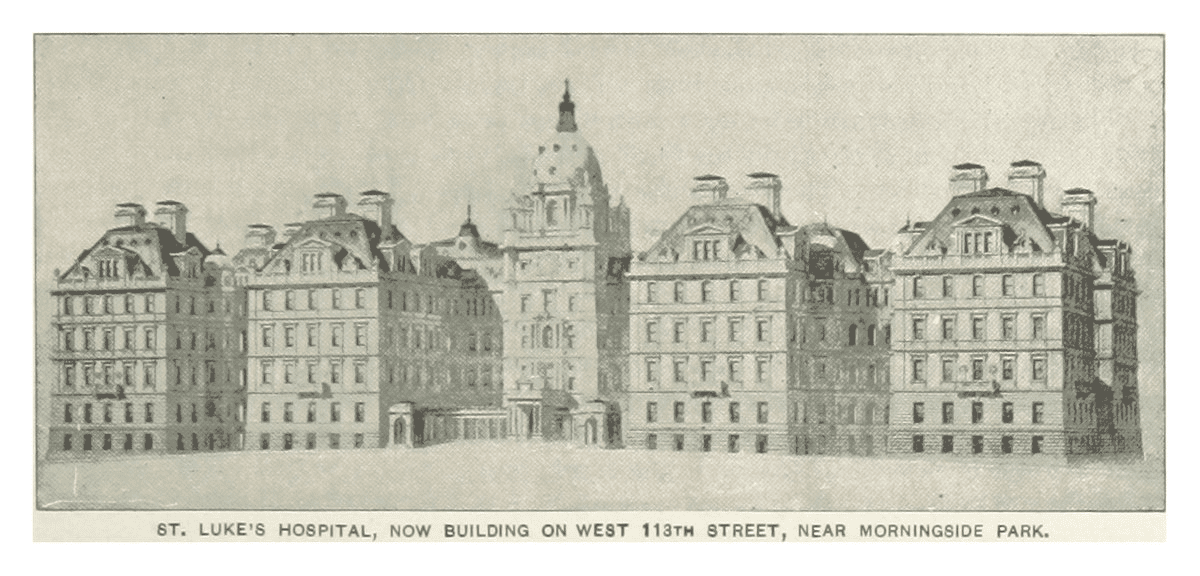
In 1892, Mount Sinai Morningside bought land to develop a new facility between 113th and 114th Streets. However, this procedure was not straightforward, as the institution had to deal with eight landowners. A competition was announced for the best design. About eighty different firms participated in it. Most of the designs were presented in the Gothic style, but the competition was won by American architect Ernest Flagg, who was the only one whose design was in the style of the French Renaissance revival. Work on the project began in 1893. There were many delays during construction, so the building was not fully completed until the end of 1896. The total cost amounted to about two million dollars.
In 1901, the institution began planning the building of additional pavilions for patients. At that time, the funding situation was challenging, so the building was financed by the wife of the wealthy railroad magnate, Margaret J. Plant. Work on the first pavilion, named Travers Pavilion, began in 1904 and was completed in 1906. It was located on 114th Street. The construction of the second pavilion, Scrymser Pavilion, commenced in 1926 by means of magnate James Alexander Scrymser. It was completed in 1928. After World War II, these two pavilions were dismantled.
Further development of the institution
In 1952, Mount Sinai St. Luke’s merged with Woman’s Hospital and continued its operations as Luke’s Hospital Center. It was also partially connected to Columbia University. In 1971, the hospital became fully affiliated with Columbia University. In 1978, the clinic merged with Roosevelt Hospital, thus becoming known as St. Luke’s–Roosevelt Hospital Center. In 1997, the institution started cooperating with Beth Israel Medical Center, forming Greater Metropolitan Health Systems, Inc. In 1998, it was renamed Continuum Health Partners. By 2013, Continuum Health Partners joined Mount Sinai Medical Center, leading to the establishment of Mount Sinai Health System, and shortly thereafter, St. Luke’s Hospital became Mount Sinai St. Luke’s. The hospital received its current name in 2020.